The average bedroom wastes 12–18 cubic feet of storage potential under the bed frame. That’s enough volume to store an entire closet’s worth of off-season clothing, extra bedding, or seldom-used gear. Instead of letting dust bunnies claim that real estate, homeowners can reclaim it with purpose-built storage systems. Whether working with a cramped studio apartment or a master suite that needs better organization, under-bed storage offers a low-profile solution that doesn’t sacrifice floor space or require wall anchors. This guide walks through proven storage types, sizing considerations, and efficiency tactics that turn wasted space into functional square footage.
Table of Contents
ToggleKey Takeaways
- Under-bed storage can reclaim 12–18 cubic feet of wasted bedroom space, eliminating the need for costly vertical square footage while keeping items accessible but out of sight.
- Always measure actual floor-to-frame clearance on-site rather than relying on manufacturer specs, accounting for bed skirts, mattress thickness, and support beams that reduce usable height.
- Hard-shell rolling bins with dual-wheel casters or quality ball-bearing wheels are the most practical solution, though DIY under-bed drawers on rails offer superior access and a cleaner aesthetic.
- Vacuum-sealed bags compress seasonal textiles by 50–75% but suit only quarterly rotation, not long-term storage of down or natural fibers that lose loft under compression.
- Maximize efficiency by grouping items by access frequency, labeling all containers with contents and dates, and rotating stored items annually to prevent moisture buildup and maintain airflow.
- Raise low bed frames using bed risers (3–8 inches) or taller furniture legs if clearance falls below 10 inches, enabling larger containers and improving the practicality of under-bed storage systems.
Why Under-Bed Storage Is a Game-Changer for Small Spaces
Vertical square footage costs money. Horizontal square footage under a bed frame costs nothing but collects dust. The math favors storage.
Most standard bed frames sit 12–15 inches off the floor. Platform beds drop that to 6–8 inches, while adjustable bases can range anywhere from 10–20 inches depending on leg height. Each inch of clearance translates to usable volume without eating into walkways, closet space, or visual square footage. For renters who can’t add built-ins or homeowners maxing out closet systems, that hidden cavity becomes prime territory.
Under-bed storage shines in three scenarios: seasonal rotation (winter coats, holiday decor), infrequently accessed items (luggage, camping gear, archived paperwork), and overflow from undersized closets (shoes, linens, bulky sweaters). It keeps these items accessible but out of sight, which matters in open-plan layouts or bedrooms that double as home offices.
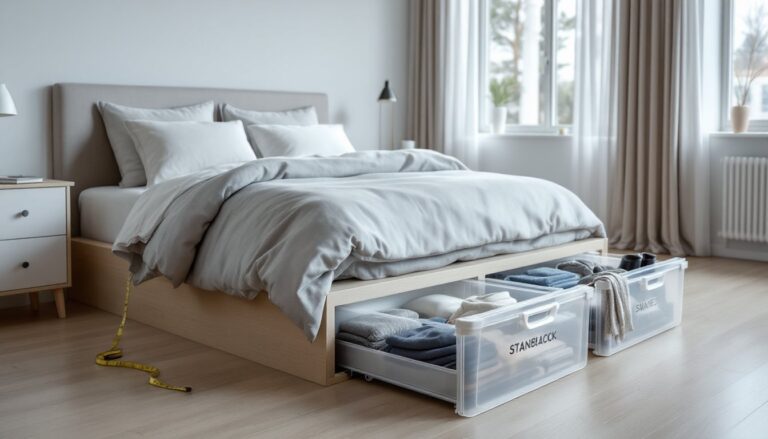
Before buying bins or building drawers, measure actual clearance, not the manufacturer’s spec. Bed skirts, thick mattresses, and non-standard frames can steal 1–2 inches. Measure from floor to the lowest obstruction (side rail, center support beam, or slat). That’s the true working height. Length and width matter too: measure the usable footprint between bed legs or support posts to avoid buying containers that won’t slide in.
One caution: under-bed storage works best on hard flooring (hardwood, laminate, tile) or low-pile carpet. Thick shag or plush carpet adds friction and makes rolling bins difficult to slide. If working with carpet, prioritize wheeled solutions with larger casters, at least 2 inches in diameter, to roll smoothly without snagging fibers.
Types of Under-Bed Storage Solutions
Rolling Bins and Drawers
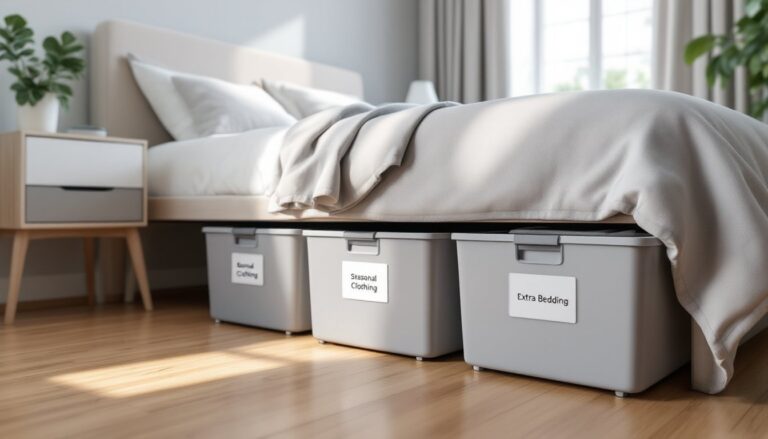
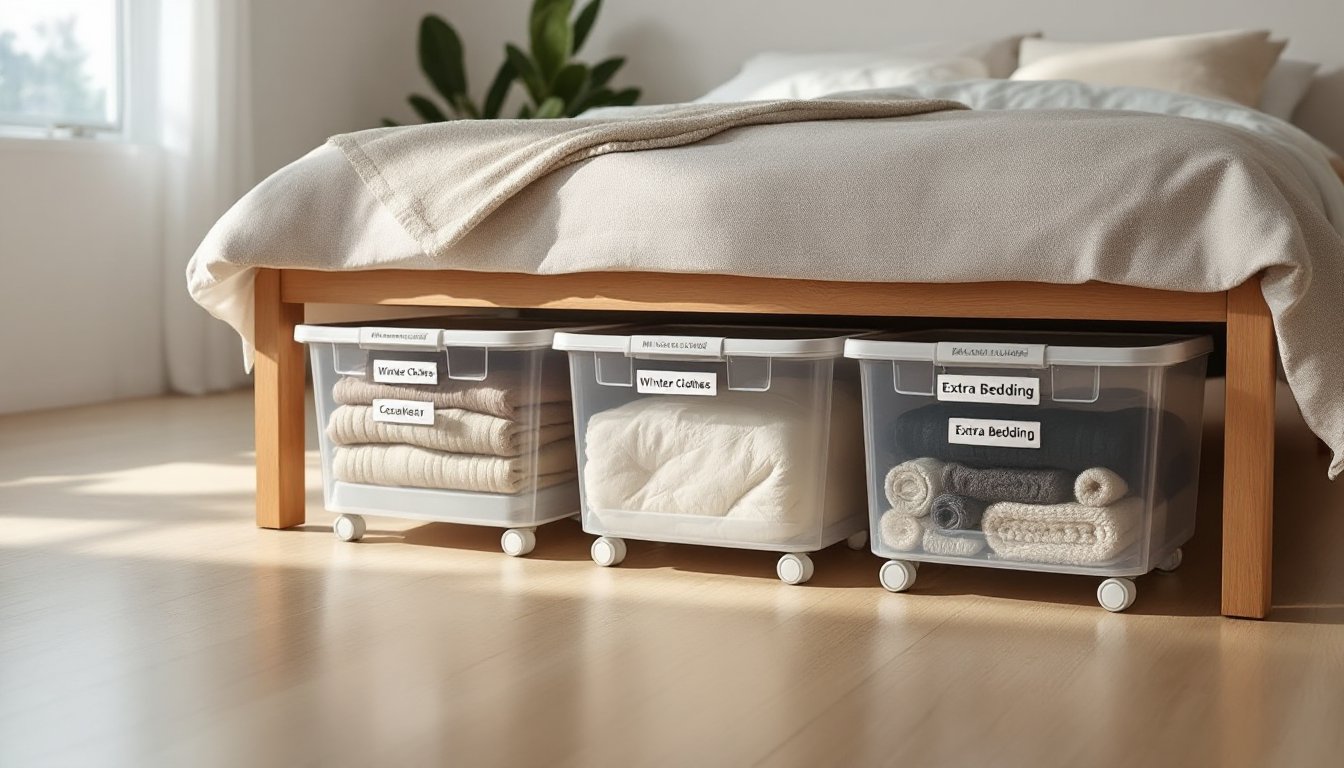
Hard-shell rolling bins are the workhorse option. Look for polypropylene or ABS plastic construction, both resist moisture and won’t warp under weight. Standard dimensions run 12–15 inches tall, 24–30 inches wide, and 16–24 inches deep. Most include recessed lids to keep contents dust-free and stackable profiles if storing elsewhere during part of the year.
Caster quality matters more than container quality. Cheap wheels bind, squeak, or snap off under load. Prioritize bins with dual-wheel casters (two small wheels per corner instead of one) or ball-bearing wheels rated for at least 20 pounds per caster. Swivel casters on all four corners offer easier maneuvering in tight spaces, but fixed rear wheels with swivel fronts provide straighter tracking if sliding bins in and out frequently.
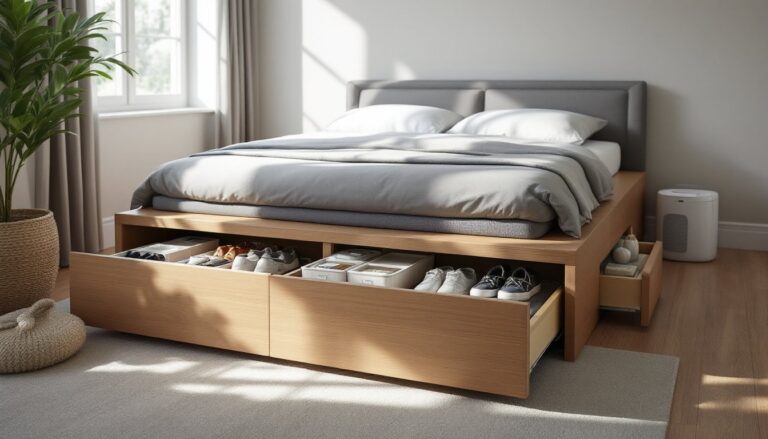
For a cleaner look and better access, under-bed drawers built on rolling frames outperform bins. These slide on wooden or metal rails and pull out fully, eliminating the need to crouch and dig. Some full-size storage bed frames integrate built-in drawer boxes with dovetail joinery and soft-close slides, ideal for permanent installations. DIY builders can follow free plans from resources like Ana White’s under-bed drawer project, which uses 1×4 pine, ½-inch plywood, and 2-inch casters to create custom-sized rolling boxes for around $30–$50 in materials per drawer.
When building drawers, use actual lumber dimensions: a 1×4 measures ¾ inch by 3½ inches, not 1 inch by 4 inches. Cut plywood bottoms to fit inside the frame (not underneath) for better weight distribution. Pre-drill all screw holes to prevent splitting, and apply wood glue at joints before fastening. Finish with polyurethane or paste wax on the bottom panel to reduce friction against flooring.
Vacuum-Sealed Bags and Soft Organizers
Vacuum-sealed storage bags compress bulky textiles, comforters, pillows, winter jackets, into flat packages that slide easily under low-clearance beds. Most compress contents by 50–75%, turning a 12-inch pile of sweaters into a 3–4-inch bag. Use bags with double-zip seals and one-way valves that prevent air from seeping back in. Cheaper single-zip models lose suction within weeks.
A few limitations: vacuum bags aren’t meant for long-term storage of down or natural fibers, which can lose loft if compressed for more than a few months. They also don’t stack well once under the bed, the weight of the mattress presses down and can compromise the seal. Use them for seasonal rotation, not archive storage. Mark each bag with a permanent marker or label (contents and date) on the bag’s exterior before vacuuming, since compressed contents become unrecognizable.
For items that don’t need compression, fabric organizers with reinforced tops offer a middle ground between bins and bags. These soft-sided boxes use cardboard inserts or wire frames to hold shape, include zippered tops to keep dust out, and often feature clear vinyl windows for at-a-glance identification. They’re lighter than hard bins, easier to stuff into irregular spaces, and washable if they get dirty. But, they won’t protect contents from moisture or pests as effectively as hard-shell containers.
Use fabric organizers for shoes, handbags, craft supplies, or toys, items that benefit from compartmentalization but don’t require crush protection. Many designs include internal dividers that prevent smaller items from clumping together. Avoid overstuffing: fabric sides bulge and make sliding difficult if packed beyond about 80% capacity.
How to Maximize Under-Bed Storage Efficiency
Maximizing under-bed space starts with an honest audit. Pull everything out from under the bed and sort into three piles: keep, relocate, discard. Items stored under the bed should be things accessed 1–4 times per year. Anything used weekly belongs in a closet or dresser. Anything never used belongs in a donation box.
Once the keeper pile is sorted, group by use case and frequency. Store the least-accessed items (holiday decor, archived tax documents) at the head of the bed where retrieval is harder. Place seasonal clothing or gear that rotates quarterly at the foot or sides for easier access. Use smaller containers within larger bins to prevent items from shifting, shoe boxes, zippered pouches, or creative storage ideas like repurposed takeout containers work well for small parts, cables, or accessories.
Label everything. Even clear bins become a guessing game when stacked or shoved deep under a bed. Use a label maker, painter’s tape and marker, or adhesive chalkboard labels on the outward-facing side of each container. Include both contents and date stored: knowing that “winter sweaters – Oct 2025” lives in the blue bin saves time during seasonal swaps.
If bed clearance allows, consider tiered storage. Some rolling bin systems include stackable trays that sit on top of a base unit, effectively doubling capacity. This works only if clearance exceeds 15 inches and the bed frame has a solid platform or slats close together (less than 3 inches apart) to prevent sagging. Never stack bins if they contact the mattress from below, it creates pressure points and voids warranties on memory foam or hybrid mattresses.
Raise the bed if current clearance is under 10 inches. Bed risers lift frames by 3–8 inches and cost $15–$40 for a set of four. Choose risers rated for the bed’s total weight (frame + mattress + occupants), typically 1,000–1,500 pounds for a queen. Stackable risers allow custom height adjustments, but ensure they include recessed tops that nest into bed legs to prevent shifting. For a sturdier solution, replace short legs with taller ones (6-inch or 8-inch furniture legs) using the existing bolt holes, or build a simple platform frame from 2×4 or 2×6 lumber to elevate the entire bed.
Maintain airflow under the bed, especially in humid climates or basements. Over-packing the space restricts air circulation and can trap moisture, leading to mildew on fabrics or warping on wood containers. Leave at least 2–3 inches of clearance between containers and between the outermost bins and the walls. Use desiccant packets or moisture absorbers inside bins storing textiles in damp environments.
Rotate stored items annually. Even if contents don’t change, pulling bins out once a year prevents forgotten items from languishing and allows for cleaning dust and debris that migrate under the bed. Vacuum the floor and wipe down bin exteriors before sliding everything back in. It’s also a good time to check caster wheels for damage or debris buildup and lubricate moving parts with silicone spray (not WD-40, which attracts dust).
For space-saving solutions in particularly tight quarters, look for shallow bins designed specifically for platform beds or consider wall-mounted systems that free up floor space entirely. Prioritize multi-purpose furniture where possible, ottomans with hidden compartments, benches with lift-top storage, or modular shelving that tucks into corners all reduce reliance on under-bed storage when square footage is truly limited.
Conclusion
Under-bed storage isn’t glamorous, but it’s effective. With the right bins, drawers, or bags matched to actual clearance and use cases, that forgotten cavity becomes a practical extension of closet space. Measure twice, label everything, and rotate contents annually to keep the system working.