Kitchen chaos has a way of sneaking up on you. One day you’re cooking in a pristine space, and the next you’re digging through a junk drawer for the potato peeler while canned goods tumble out of an overstuffed cabinet. Storage baskets aren’t just cute add-ons, they’re practical tools that can transform how you use your kitchen. They corral clutter, maximize awkward spaces, and keep frequently used items within arm’s reach. Whether you’re working with a sprawling pantry or a tiny galley kitchen, the right baskets can turn dead space into functional storage and make meal prep a whole lot less frustrating.
Table of Contents
ToggleKey Takeaways
- Kitchen storage baskets transform cluttered spaces into functional zones by corralling items, maximizing awkward cabinet areas, and reducing decision fatigue during meal prep.
- Wire baskets excel in pantries and humid environments with ventilation-dependent items like produce, while woven and rattan baskets add style to countertop storage and work best in dry, heat-resistant locations.
- Proper measurement before purchasing is critical—subtract 1 inch from cabinet dimensions for clearance and leave 2 inches of vertical space above stacked baskets to ensure comfortable access.
- Creative placement strategies like under-sink command centers, baking stations, and pull-out drawer systems maximize kitchen storage without requiring a full renovation.
- Choose basket materials based on weight capacity: reinforced wire construction with sturdy handles for heavy items like canned goods, and lightweight fabric or woven options for snacks and packaging.
- Small kitchens benefit from vertical installation, color-coded basket systems, and regular quarterly maintenance to sustain organization and adapt the storage system to changing needs.
Why Kitchen Storage Baskets Are Essential for Modern Homes
Kitchen storage baskets solve problems that shelving alone can’t tackle. They create portable zones, think snack baskets for the kids, baking supplies that move from pantry to counter, or cleaning products that slide out from under the sink. Unlike rigid organizers, baskets adapt to what you actually own rather than forcing you into a preset system.
They’re also critical for kitchens with deep cabinets or high shelves. A pull-out basket turns a blind corner cabinet from a black hole into usable real estate. A handled basket on the top pantry shelf means you’re not standing on a stepstool with one hand stretched into the unknown, hoping to grab the right box.
From a workflow standpoint, baskets reduce decision fatigue. When everything from breakfast items to lunch-packing supplies has a designated basket, you’re not opening five cabinets to assemble a meal. Studies on home organization consistently show that visual grouping, like corralling similar items in a single container, cuts down on prep time and reduces stress, particularly during the morning rush.
For renters or anyone hesitant to drill holes or install permanent fixtures, baskets are a no-commitment solution. Drop them on existing shelves, stack them in cabinets, or line them up along a countertop. When you move, they move with you.
Types of Kitchen Storage Baskets and Their Best Uses
Not all baskets are created equal. Material, shape, and construction affect both function and durability. Here’s how to match basket types to specific kitchen tasks.
Wire Baskets for Pantry and Cabinet Organization
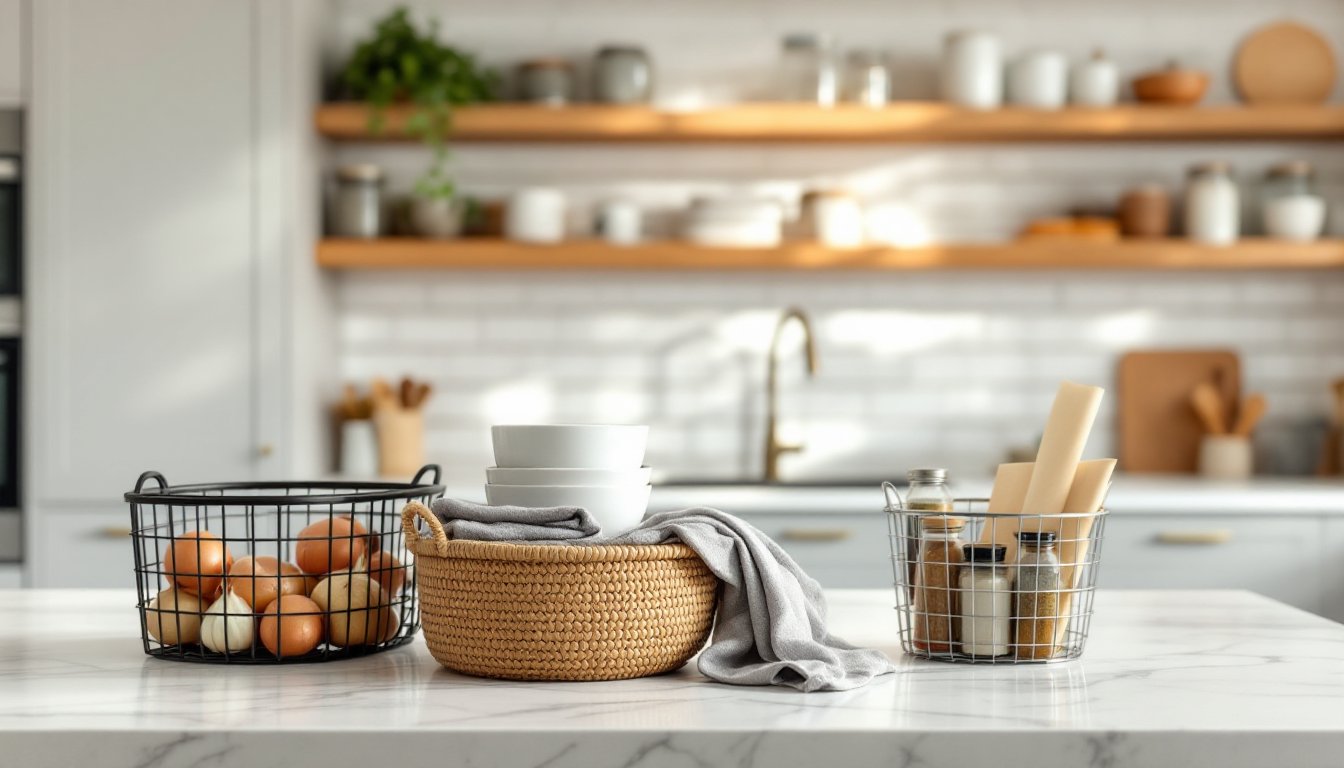
Wire baskets, especially coated steel or chrome-plated models, excel in high-humidity areas and pantries where airflow prevents moisture buildup. They’re a top pick for storing onions, potatoes, and garlic, since produce needs ventilation to stay fresh longer. The open grid design also makes it easy to spot what you have at a glance, which cuts down on duplicate purchases and food waste.
In cabinets, wire baskets with handles or pull-out rails transform deep shelving. Install a pair of drawer-style wire baskets on undermount slides (rated for at least 50 lbs per pair), and suddenly that awkward lower cabinet becomes a pull-out pantry. Mounting typically requires drilling into the cabinet sides, use 1-inch wood screws and check that your cabinet box is solid wood or plywood, not particleboard, which won’t hold slides reliably.
For stacking, look for wire baskets with a flat rim rather than rolled edges. Flat rims provide a stable stacking surface and prevent tipping when you pull one basket out from under another. Many organizing experts on platforms like The Kitchn recommend labeling individual baskets to maintain the system long-term, especially in shared households.
Wicker cube storage bins and other lidded wire baskets are useful for concealing less attractive packaging, think snack bar wrappers or bulk buys that don’t fit the aesthetic. A hinged lid keeps dust out and maintains a cleaner look on open shelving.
Woven and Rattan Baskets for Stylish Countertop Storage
Woven baskets, rattan, seagrass, or bamboo, add warmth and texture, making them ideal for countertop storage where function meets visibility. They’re perfect for corralling everyday items like coffee pods, tea tins, or a rotating selection of fruit. Rattan holds up better than seagrass in dry climates but can crack if placed too close to a heat source (within 12 inches of a stovetop or oven vent isn’t recommended).
For durability, check the weave quality. Tight, even weaving lasts longer and won’t snag dish towels or pot holders. Baskets with a water-resistant liner or coated interior are smart for storing produce that might release moisture.
Size matters on countertops. A basket that’s too large eats up prep space: too small, and it becomes clutter rather than a solution. A good rule of thumb: baskets shouldn’t occupy more than one-third of your usable counter space. Rectangular baskets make better use of corners and edges than round ones.
If you’re going for the open-shelf trend, woven baskets create visual consistency without looking overly uniform. Mix heights and widths slightly, say, a tall basket for rolled dish towels next to a shallow one for napkins, to avoid the “catalog staging” look. This approach is popular among creative organizers featured on IKEA Hackers, where modular storage gets personalized.
How to Choose the Right Kitchen Storage Baskets for Your Needs
Start by measuring your spaces before you buy anything. Grab a tape measure and record the interior dimensions of the cabinets, shelves, or countertops where baskets will live. For cabinets, measure width, depth, and height at the narrowest points, warped shelves or protruding hinges can shrink usable space by an inch or more.
Once you have dimensions, subtract 1 inch from width and depth to account for clearance. Baskets that fit too snugly become a pain to pull in and out, especially when they’re full. For stackable baskets, leave at least 2 inches of vertical clearance above the top basket so you can lift it without scraping knuckles on the shelf above.
Think about what you’re storing. Heavy items like canned goods or small appliances need baskets with reinforced bases and sturdy handles, look for welded wire construction or solid wood bottoms. Lighter items like bags of chips, napkins, or plastic containers can go in woven or fabric-collapsible baskets.
Handle style affects usability. Cut-out handles (holes punched into the basket sides) work fine for lightweight loads but dig into your hands when you’re hauling 10 pounds of potatoes. Rope or metal handles distribute weight better and are easier to grip with one hand when you’re juggling a grocery haul.
Color and finish should match your workflow, not just your aesthetic. Light-colored baskets show dirt faster, if you’re storing produce or bulk goods that shed debris, darker finishes or wipeable coatings save cleaning time. White or natural tones look clean and airy but require regular maintenance, particularly in high-traffic family kitchens.
Creative Ways to Use Storage Baskets Throughout Your Kitchen
Baskets aren’t just for pantries. Here are seven high-impact placements that tackle common kitchen pain points.
1. Under-Sink Command Center: Use a shallow wire basket to hold sponges, brushes, and dish soap on the cabinet floor. A taller basket corrals trash bags and cleaning sprays against the back wall. This setup keeps cleaning supplies upright and prevents the avalanche that happens when you grab one bottle from a tightly packed space.
2. Fridge Door Bins: Narrow wire or plastic baskets with handles can hang on refrigerator shelves or sit on door shelves. Use them for snack packs, yogurt cups, or condiment bottles. When grouped in a basket, these items stay organized and are easier to pull out for a quick inventory check.
3. Baking Station: A large rectangular basket on a lower pantry shelf holds flour, sugar, baking powder, measuring cups, and parchment paper. When it’s time to bake, carry the whole basket to the counter instead of making three trips.
4. Breakfast Central: Load a countertop basket with cereal, granola bars, and a small container of utensils. Kids can grab their own breakfast without rifling through cabinets. Pair this idea with space-saving kitchen table setups for compact dining areas where every inch of counter matters.
5. Charging Station: A decorative basket near an outlet corrals phone chargers, tablets, and earbuds so they’re not tangled on the counter or buried in a drawer. It keeps tech accessible but visually contained.
6. Seasonal Rotation: Use labeled baskets for holiday baking supplies, picnic gear, or canning equipment. Store off-season baskets on high shelves or in the garage, and swap them into the kitchen as needed. This keeps your active pantry lean.
7. Produce Sorting: Set up three wire baskets on a pantry shelf, one for onions, one for potatoes, one for garlic. The airflow prevents spoilage, and separating varieties keeps flavors from cross-contaminating. Detailed guidance on organizing pantry zones is a staple of resources like Martha Stewart, where functional layouts meet practical design.
DIY Tips for Maximizing Basket Storage in Small Kitchens
Small kitchens demand strategic thinking. Every square inch counts, and baskets are one of the easiest ways to add storage without a full renovation.
Go Vertical: Install a row of command hooks or a narrow rail on the inside of a cabinet door, then hang lightweight wire baskets to hold foil, plastic wrap, or sandwich bags. This uses dead space and keeps flat items from getting buried in a drawer.
Stack Smart: Choose baskets with straight sides rather than tapered shapes, they stack more efficiently and waste less vertical space. For extra stability, add a shelf riser (basically a metal or acrylic platform that creates a second tier). Place one basket on the riser and another underneath: you’ve just doubled your storage footprint.
Create Zones: Use color-coded or labeled baskets to define kitchen zones even in a single cabinet. A blue basket holds baking supplies, a green one holds snacks, a red one holds pet food. This system works especially well for households where multiple people access the same spaces. Explore more strategies on maximizing kitchen storage in compact layouts.
Slide-Out Solutions: If you’re comfortable with a drill and a level, install pull-out basket drawers in lower cabinets. Kits are available at home centers: most include the baskets, slides, and mounting hardware. Installation takes about an hour per cabinet. Mark stud locations (or solid sides) with a pencil, pre-drill holes to avoid splitting wood, and mount the slides level, use a torpedo level for tight spaces. Slides rated for 75 lbs or more handle the weight of canned goods and small appliances without sagging.
Repurpose Existing Baskets: Before buying new storage, audit what you already own. Decorative baskets from the living room or bedroom can often pull double duty in the kitchen. A magazine basket becomes a holder for cutting boards: a shallow tray-style basket corrals spices.
Maintain the System: Baskets only work if you stick with the plan. Set a reminder every three months to declutter and reset. Toss expired items, return strays to their designated baskets, and adjust the system if your needs have changed. Organization isn’t a one-time project, it’s an ongoing habit.
Safety Note: When installing pull-out systems or hanging baskets, wear safety glasses to protect against metal shavings and wood dust. If drilling into tile backsplashes or stone countertops to mount brackets, use a carbide-tipped bit and go slow to avoid cracking. For cabinets with particleboard construction, consider alternative mounting methods like adhesive-backed organizers rather than screws, which won’t hold reliably in compressed wood products.
With the right baskets in the right places, even a small kitchen can feel organized and functional, no major renovation required.