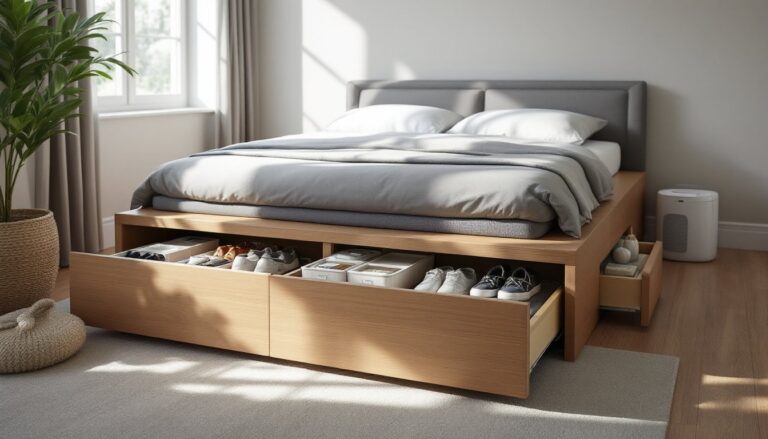
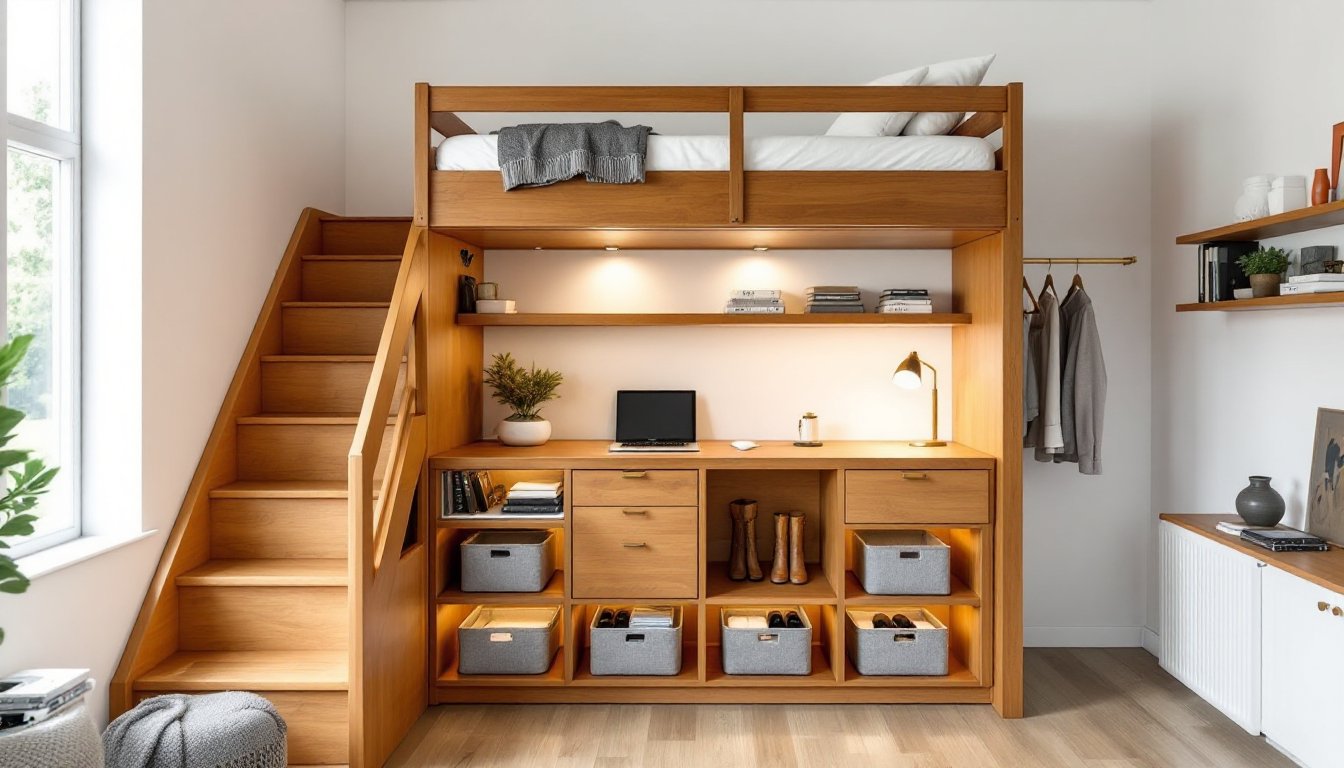
Square footage is expensive, and floor space is finite. That’s exactly why a loft bed for storage has become one of the smartest moves a homeowner, renter, or DIY builder can make in 2026. By lifting the mattress to eye level, the whole footprint underneath opens up for desks, dressers, wardrobes, or whatever else the room needs to swallow. This guide walks through the styles worth considering, the features that matter, and how to customize one for serious organization without sacrificing comfort or safety.
Table of Contents
ToggleKey Takeaways
- A loft bed for storage reclaims up to 20 square feet of otherwise dead floor space, allowing you to add desks, dressers, and wardrobes underneath while maximizing small-room functionality.
- Height matters—low lofts (40–50 inches) work for kids and low-ceiling rooms, while high lofts (60–72 inches) require at least an 8-foot ceiling and provide comfortable standing or sitting space below.
- Choose a loft bed type based on your room’s primary need: built-in desks and shelving for students and remote workers, or wardrobes and drawers for closet-starved spaces.
- Critical safety features include guardrails at least 5 inches above the mattress, a weight capacity of 250 lbs minimum, 30+ inches of headroom for comfortable sitting, and proper ceiling clearance.
- Organize the under-bed zone by assigning each section a purpose—open shelves for daily items, lidded containers for seasonal storage, LED lighting, and dedicated zones for shoes—to prevent clutter from building up.
- A well-planned loft bed with proper measurements and zoning strategy can make a 10×10 room store and function like a space twice its size.
Why a Loft Bed Is the Ultimate Small-Space Storage Solution
A standard twin mattress takes up roughly 38 x 75 inches of floor, about 20 square feet that’s otherwise dead space. Lofting it 60 inches or more reclaims that area for active use. In studios, kids’ rooms, and tight guest rooms, that swap can be the difference between cluttered and livable.
Unlike a standard bunk, a loft bed dedicates the lower zone entirely to function. He or she can park a full work-from-home desk down there, slide in a dresser, or build a closet wall. For renters who can’t touch the walls, it’s a freestanding way to add storage that moves with them.
It also plays well with other vertical strategies. Pair it with wall-mounted shelves and the clever small bedroom solutions most designers recommend, and a 100-square-foot bedroom suddenly behaves like 150.
Types of Storage Loft Beds to Consider
Not every loft bed solves the same problem. Some prioritize a workstation, others lean into closed storage, and a few try to do everything. Choosing the right type starts with an honest look at what the room is missing, desk space, drawer space, or hanging space.
Height matters too. Low lofts sit around 40–50 inches off the floor and suit younger kids or rooms with low ceilings. High lofts clear 60–72 inches, leaving room to stand or sit underneath. Anything taller than that should be paired with an 8-foot ceiling minimum to avoid a cramped sleeping zone up top.
Loft Beds With Built-In Desks and Shelving
These are the workhorses for students and remote workers. The desk typically spans the full length of the bed, with open cubbies or a hutch tucked against the wall side. Look for a desktop depth of at least 20 inches, anything shallower won’t comfortably hold a monitor and keyboard.
Builders like Ana White have published a loft bed with bookcase plans that show how a single frame can integrate shelving without extra footprint. For pre-built options, a twin low loft with storage keeps the desk reachable for younger users while still offering shelf cubbies.
Loft Beds With Wardrobes, Drawers, and Hidden Compartments
When closet space is the real bottleneck, this style earns its keep. Full-height wardrobes mount under one end of the bed, often paired with a three- or four-drawer dresser opposite. Some frames hide step-drawers in the ladder itself, every stair tread doubles as a pull-out bin.
For adult bedrooms, a California king bed with storage may be a better fit if floor space allows, but for kids’ rooms and guest setups, a lofted version with built-in wardrobe wins on footprint.
Key Features to Look For Before You Buy or Build
Before swiping a card or cutting lumber, check the specs that actually affect daily use and safety.
- Weight capacity: Solid frames should support at least 250 lbs for the sleeper plus mattress. Adult-rated lofts list 400 lbs or more.
- Guardrails: Per ASTM F1427 safety standards, guardrails should rise at least 5 inches above the top of the mattress on the open side.
- Ladder vs. stairs: Stairs eat more floor space but are safer for kids and double as drawers. Angled ladders are easier on bare feet than vertical ones.
- Material: Solid hardwood (maple, oak) holds fasteners better than MDF over time. Steel frames are lighter but can squeak if hardware loosens.
- Mattress clearance: Leave 2–3 inches between the top of the mattress and the guardrail top so bedding still tucks in safely.
Ceiling clearance is the one most people forget. He or she should be able to sit up in bed without head-banging the drywall, measure from the top of the mattress to the ceiling and aim for 30+ inches of headroom.
Smart Ways to Organize the Space Beneath Your Loft Bed
Open under-bed space turns into a junk pile fast without a plan. The fix is zoning, assign each section a job before anything moves in.
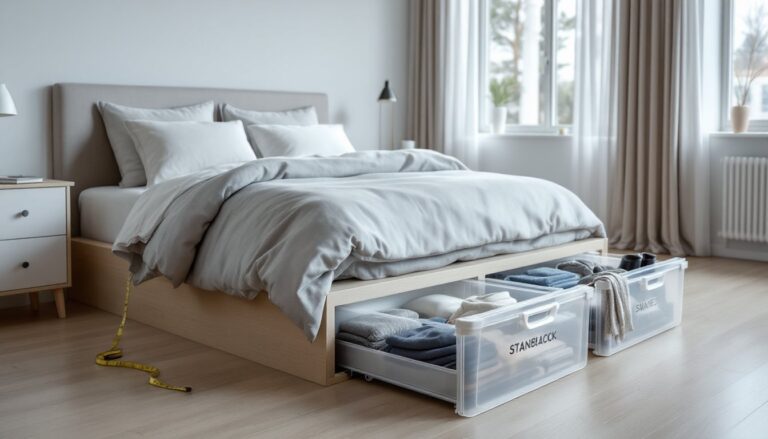
- Measure the cavity first. Note width, depth, and the height from floor to the underside of the slats. That clearance dictates what furniture or bins will fit.
- Layer storage by frequency of use. Daily-use items (clothes, books, laptop) belong on open shelves or in drawers. Seasonal items go in lidded containers toward the back.
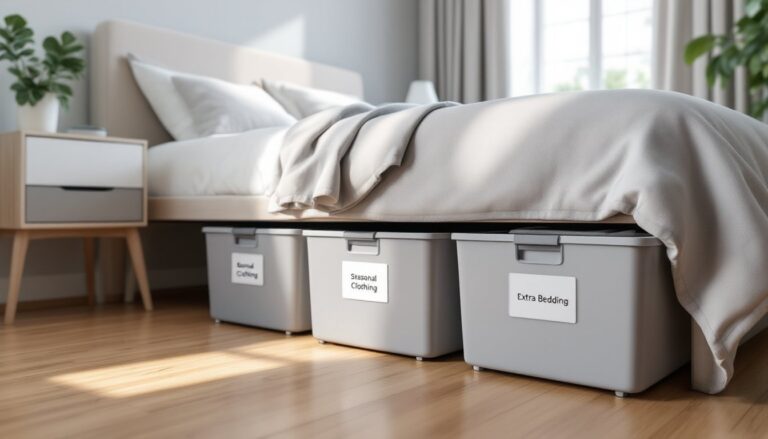
- Use the right containers. Fabric storage bins work well on open shelves because they’re light and breathable for textiles. Plastic storage bins for under the bed suit lower-clearance zones since they slide cleanly on hard floors and protect against dust.
- Add a dedicated shoe zone. A simple shoe under the bed storage tray or a tilted rack against one leg keeps pairs visible without eating drawer space.
- Light the cave. Stick-on LED puck lights or a plug-in strip under the slats turn a dim corner into usable workspace.
For inspiration on mixing closed and open storage in a single piece, the same logic behind a day bed storage setup applies here, visible bins for daily stuff, hidden compartments for the rest.
DIY Tips for Customizing a Loft Bed for Maximum Storage
Building or modifying a loft bed is well within reach for an intermediate DIYer with a circular saw, drill, and a free weekend. A miter saw gives cleaner crosscuts, but a circular saw with a speed square works fine.
Materials checklist for a basic twin loft frame:
- (4) 4×4 posts at 72 inches (actual size 3.5 x 3.5 in.)
- (2) 2×6 side rails at 78 inches
- (2) 2×6 end rails at 41 inches
- (10–12) 1×4 slats at 41 inches
- 3-inch structural screws (GRK or equivalent), not drywall screws
- Wood glue, sandpaper (120 and 220 grit), and finish of choice
Safety first: Wear safety goggles, hearing protection, and an N95 mask when cutting and sanding. Clamp workpieces, never freehand a cut on a sawhorse.
A few customization moves that pay off:
- Notch the posts with a dado to seat the side rails flush. This transfers weight into the post rather than relying on screws in shear.
- Add a ledger board along the inside of each rail to support slats, a 2×2 screwed every 8 inches handles the load cleanly.
- Build the ladder as a staircase with hollow risers, then add hinged tops to each tread for shoe under the bed storage that’s actually accessible.
- Frame in a wardrobe wall at one end using 1×4 furring strips and a closet rod, instant hanging space.
- Pre-finish all parts before assembly. Polyurethane in tight corners after the fact is a nightmare.
For IKEA owners who’d rather hack than build from scratch, the KURA and STUVA hacks crowd has logged dozens of frame mods worth borrowing. Beginners looking for foundational skills before tackling a full build will find solid tutorials at The Handyman’s Daughter, covering everything from pocket holes to finishing.
If a full loft build feels like too much, a full size storage bed frame or a twin bunk with built-in storage offers many of the same wins with less cutting.
A note on permits: Freestanding furniture doesn’t require a permit. But if anyone is anchoring the frame to wall studs (recommended for anything over 60 inches tall), they should hit actual 2×4 studs with the screws, toggle bolts in drywall alone won’t hold a loft under sleeping load.
A loft bed earns its footprint by doing two jobs at once. With the right type, honest measurements, and a clear zoning plan underneath, even a 10×10 room can store more than a space twice its size.