A California king bed is already a luxury, at 72 inches wide and 84 inches long, it’s the longest standard mattress size available. But when you’re working with limited closet space or a bedroom that doubles as a catch-all, that footprint can feel more like a liability than a luxury. Adding integrated storage transforms the bed from a space hog into a highly functional piece of furniture. Whether it’s out-of-season clothing, extra bedding, or items that never quite found a home, built-in storage keeps clutter out of sight without sacrificing floor space for bulky dressers or storage bins.
Table of Contents
ToggleKey Takeaways
- A California king bed with storage transforms bedroom clutter into organized, accessible space by utilizing the void beneath the mattress without sacrificing floor area for additional furniture.
- Drawer storage beds offer easy-access compartments rated for 75–100 pounds per drawer, while hydraulic lift beds provide over 40 cubic feet of storage capacity—choose based on room layout and access frequency.
- Proper support is essential: California king storage beds must handle 400–600 pounds total weight, requiring 2×6 or 2×8 joists spaced no more than 24 inches apart to prevent sagging.
- Gas struts for hydraulic lift beds need precise force ratings between 800N and 1200N per pair; undersizing causes difficulty lifting, while oversizing creates unsafe spring-up force.
- Level installation is critical to prevent drawers from sliding open and hydraulic mechanisms from binding—always use shims under frame legs and measure diagonals before finalizing assembly.
- A California king bed with storage build requires careful pre-planning: measure room dimensions, map furniture placement with painter’s tape, and check ceiling height to ensure the final footprint doesn’t compromise traffic flow or comfort.
Why Choose a California King Bed with Storage?
The obvious advantage is space efficiency. A California king mattress occupies roughly 42 square feet of floor area. That’s prime real estate in most bedrooms, and using the void beneath the mattress for storage makes practical sense.
Storage beds eliminate the need for additional furniture. In smaller bedrooms or studio apartments, cutting out a six-drawer dresser can free up wall space for a desk, seating, or simply better traffic flow. In larger master suites, integrated storage consolidates seasonal items, luggage, or specialty linens without creating visual clutter.
Safety and accessibility also play a role. Unlike under-bed storage bins that slide out on carpets or hardwood (often jamming or scattering dust bunnies), built-in storage is engineered for smooth operation. Drawer glides are rated for weight capacity, and hydraulic lifts are designed to hold the mattress platform securely while accessing the compartment below.
For DIY builders, constructing a storage bed frame allows full control over dimensions, materials, and finish. Platform-style frames are straightforward projects for intermediate woodworkers, and many designs skip the box spring entirely, lowering the overall bed height and simplifying the build.
Types of Storage California King Beds
Drawer Storage Beds
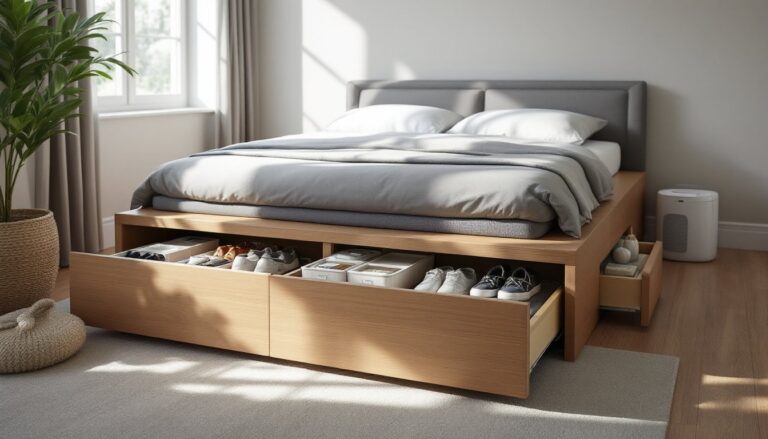
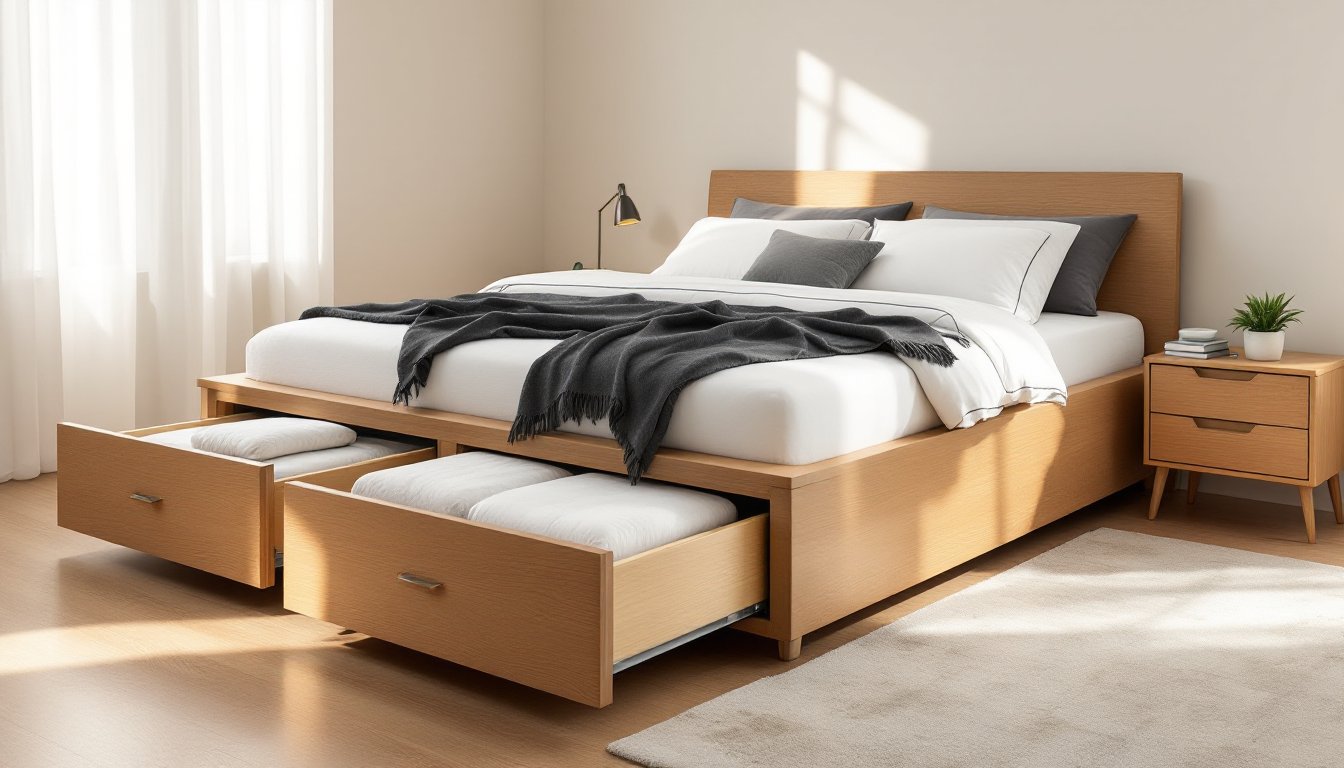
Drawer storage beds feature pull-out compartments along one or both sides of the frame. Most designs include four to six drawers, with depths ranging from 6 to 12 inches. Deeper drawers handle bulkier items like comforters or pillows, while shallower ones work well for folded clothes or accessories.
Drawer glides are the critical hardware. Ball-bearing glides rated for 75–100 pounds per drawer are standard. Soft-close mechanisms add convenience but increase cost and complexity. If building from scratch, use full-extension glides so drawers open completely, maximizing access to items stored in the back.
One consideration: drawer beds require clearance. Each drawer needs at least its depth plus a few inches to open fully. In tight spaces, drawers may interfere with nightstands, walls, or doorways. Measure carefully before committing to a layout.
For a community-tested design, the Cal-King storage bed plan offers a straightforward build with side-mounted drawers using standard 2x4s and plywood.
Hydraulic Lift Storage Beds
Hydraulic lift beds (also called ottoman or gas-lift beds) use gas struts to raise the entire mattress platform, revealing a large open compartment underneath. The storage area is typically 8 to 12 inches deep and spans the full footprint of the mattress, over 40 cubic feet of usable space.
Gas struts are rated by force, measured in Newtons (N). For a California king with mattress, platform, and bedding, plan on struts rated between 800N and 1200N per pair. Undersize the struts, and you’ll struggle to lift the platform: oversize them, and the bed may spring up too forcefully.
Lift beds require a solid platform rather than slats, since the lifting mechanism attaches to a single rigid surface. Use ¾-inch plywood or MDF for the platform, reinforced with perimeter joists to prevent sagging under the mattress weight.
Access is a major advantage: the entire storage area opens at once, making it easy to store and retrieve large items like luggage, camping gear, or bulk purchases. No clearance is needed on the sides, so lift beds work well in tight layouts or rooms where the bed is positioned against a wall.
One drawback: the bed must be made. Lifting the mattress means lifting everything on top of it, so stripping and remaking the bed is part of the process. For frequent access, drawer storage may be more practical.
How to Choose the Right Storage Bed for Your Space
Start by measuring the room and the bed’s final position. A California king measures 72 inches wide by 84 inches long. Add the frame thickness (typically 2 to 4 inches per side) and any drawer protrusion or clearance. Map this footprint on the floor with painter’s tape to visualize traffic flow, door swing, and furniture placement.
Ceiling height matters for lift beds. When raised, the platform and mattress may extend 24 to 30 inches above the frame. If the room has low ceilings (under 8 feet), a lift bed can make the space feel cramped or interfere with overhead fixtures.
Access patterns also influence the choice. If the bed is flanked by nightstands, drawer storage on the sides may be impractical. Consider foot-of-bed drawers or a lift mechanism instead. If the bed is centered in the room with open sides, drawers on both sides maximize storage capacity.
Weight capacity is critical for DIY builds. A California king mattress weighs 90 to 130 pounds, depending on type (memory foam, hybrid, innerspring). Add the platform, bedding, and stored items, and the frame must support 400 to 600 pounds total. Use 2×6 or 2×8 joists for the perimeter frame, with center support beams and legs spaced no more than 24 inches apart. Many furniture building tutorials detail proper support structures for heavy platform beds.
Material choice depends on skill level and budget. Pine is affordable and easy to work with but shows dents and scratches. Poplar takes paint well and is stronger than pine. Hardwood plywood (oak, maple, or birch veneer) offers strength and clean edges for drawer boxes. For a painted finish, MDF works well but requires edge banding to hide the particleboard core.
If purchasing a pre-made frame, check the weight rating and warranty. Frames rated for 500+ pounds are less likely to sag or fail. Warranties covering frame defects (not mattress sagging, which is separate) should run at least one year.
Installation and Assembly Tips for DIY Success
Safety first: Wear safety goggles and hearing protection when cutting lumber or drilling. A dust mask is essential for sanding MDF or plywood, as the fine particulate can irritate lungs. Gloves protect hands from splinters and sharp edges.
Before cutting, let lumber acclimate to the room for 48 hours. Wood expands and contracts with humidity, and building with green or cold-stored lumber can lead to gaps or warping later.
Cutting and assembly:
- Cut all pieces to final dimensions before assembly. Use a circular saw with a straightedge guide for long rip cuts, or a table saw for precision. A miter saw handles crosscuts and angled cuts cleanly.
- Dry-fit the frame before applying glue or fasteners. Check for square by measuring diagonals, if they’re equal, the frame is square. Adjust as needed.
- Pre-drill screw holes to prevent splitting, especially near board ends. Use 3-inch construction screws for 2x lumber joints. Add wood glue to joints for extra strength, but don’t rely on glue alone for structural connections.
- Install drawer glides before attaching drawer faces. Mount the cabinet portion of the glide to the frame, then attach the drawer portion to the drawer box. Test the slide action before finalizing placement.
- For hydraulic lifts, follow the manufacturer’s instructions precisely. Gas struts are under pressure and must be installed with the correct orientation. The piston end typically points down. Secure mounting brackets with lag bolts into solid wood, not just the platform surface.
Leveling is crucial. Use shims under the legs to level the frame front-to-back and side-to-side. An unlevel bed causes drawers to slide open, hydraulic lifts to bind, and mattresses to shift.
Finish work: Sand all exposed surfaces with 120-grit, then 220-grit sandpaper. Remove dust with a tack cloth. Apply primer before paint, especially on MDF or pine, to seal the surface and improve paint adhesion. Two coats of semi-gloss or satin paint provide durability and easy cleaning. For a natural wood finish, use polyurethane or Danish oil to protect against moisture and wear.
If following detailed workshop project plans, expect a weekend build for a basic platform with drawers. Hydraulic lift beds add complexity and may take two weekends for first-time builders.
A second pair of hands is highly recommended when flipping the frame, installing the platform, or positioning the mattress. California king frames are heavy and unwieldy, and solo lifting risks injury or damage.
Conclusion
A California king bed with storage combines comfort and utility in one footprint. Whether building or buying, the key is matching the storage type to the room layout and access needs. Drawer beds offer segmented, easy-access storage but need side clearance. Hydraulic lifts provide massive capacity and work in tight spaces but require a clear lifting zone and a made bed. Measure twice, choose hardware rated for the load, and don’t skip the prep work, most storage bed problems trace back to rushed assembly or poor leveling.