Bedrooms are typically where clutter hides, or at least gets shoved out of sight. If you’ve got seasonal clothes, extra linens, or items waiting for donation piled in your closet, under-bed storage might be your answer. Plastic under-the-bed storage bins let you reclaim floor space and organize what you already own without visible mess. They’re affordable, stackable, and built for the awkward 12- to 18-inch clearance most bed frames offer. In 2026, homeowners are ditching the “under-bed trash zone” mentality and treating that space like prime real estate. Let’s walk through how to make it work.
Table of Contents
ToggleKey Takeaways
- Plastic under-the-bed storage bins unlock approximately 25 cubic feet of wasted bedroom space and eliminate visible clutter without requiring installation or permanent commitment.
- Shallow bins (6-8 inches) work best for frequently accessed seasonal items, while deep bins (10-14 inches) maximize storage for bulky, infrequently needed items like comforters and winter coats.
- Always measure bed clearance with a tape measure at multiple points and leave 1-1.5 inches of clearance to ensure bins slide smoothly without jamming.
- Use a color-coding system combined with labeled photos or inventory lists to prevent the “forgotten junk pile” problem and avoid double-storing items.
- Store only lightweight seasonal items, extra linens, and holiday decorations under your bed—avoid heavy items, moisture-sensitive documents, food, and anything that off-gases in enclosed spaces.
- Add wheels to bins if you’ll access them regularly, use silica gel desiccant packs to prevent moisture buildup, and limit stacking to two layers maximum for easy retrieval.
Why Under-Bed Storage Bins Are a Game-Changer for Home Organization
Your bedroom is usually the smallest room in the house, which makes every square inch count. A standard queen bed sits about 14 inches off the floor, leaving a gap that most people ignore. That’s roughly 25 cubic feet of usable space just lying dormant.
Under-bed storage bins eliminate three problems at once: visible clutter, wasted space, and the “junk drawer” effect where everything gets mixed together. Unlike shelving or wall-mounted systems, they require zero installation, just slide them in and forget about them. They also keep items dust-free and protected compared to loose piles on the floor.
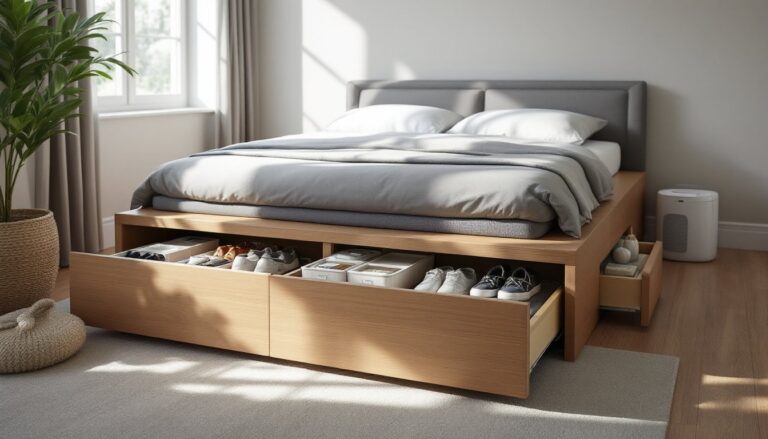
Plastic bins specifically beat fabric alternatives when moisture or accessibility isn’t the main concern. They’re waterproof, rigid enough to stack items on top, and won’t absorb odors. A bed with under bed drawers built into the frame costs $400 to $800 more, so bins give you similar function at a fraction of the cost. For renters or anyone reluctant to commit to permanent storage solutions, plastic under-the-bed storage bins are genuinely your best move.
Types of Plastic Storage Bins and How to Choose the Right One
Not all plastic bins are the same, and the wrong choice will sit under your bed unused. The main variables are depth, transparency, handles, and locking mechanisms.
Standard opaque plastic bins come in clear or colored plastic. Clear versions let you see contents without opening them, huge for avoiding the “where did I put that?” hunt. Opaque bins keep contents hidden from view if your bed sits low to the ground. Both cost $8 to $20 per bin.
Shallow bins (typically 6 to 8 inches tall) fit snugly under low bed frames and hold items like wrapping paper, art supplies, or off-season shoes. Deep bins (10 to 14 inches) hold sweaters, quilts, and larger seasonal items. The trade-off is that deep bins require more headroom.
When you’re measuring, account for bed legs and consider what actually needs to live under there. A bed with under bed drawers already built in means you’re shopping for supplementary bins, focus on shallow options that won’t block drawer function.
Comparing Shallow vs. Deep Plastic Bins
Shallow bins (6-8″ tall) excel for items you’ll need every season or need to reach often: winter scarves, off-season belts, gift wrap. They also work for small spaces. The downside is you need more of them to store the same volume, which takes up more under-bed real estate.
Deep bins (10-14″ tall) maximize storage in one footprint and work great for bulky items: comforters, pillows, winter coats. The catch is you’ll only fit one layer under most beds, and reaching stuff at the bottom requires sliding the whole bin out. If you store something you only access yearly, deep bins are worth it. If you’re a seasonal switcher who needs frequent access, shallow wins.
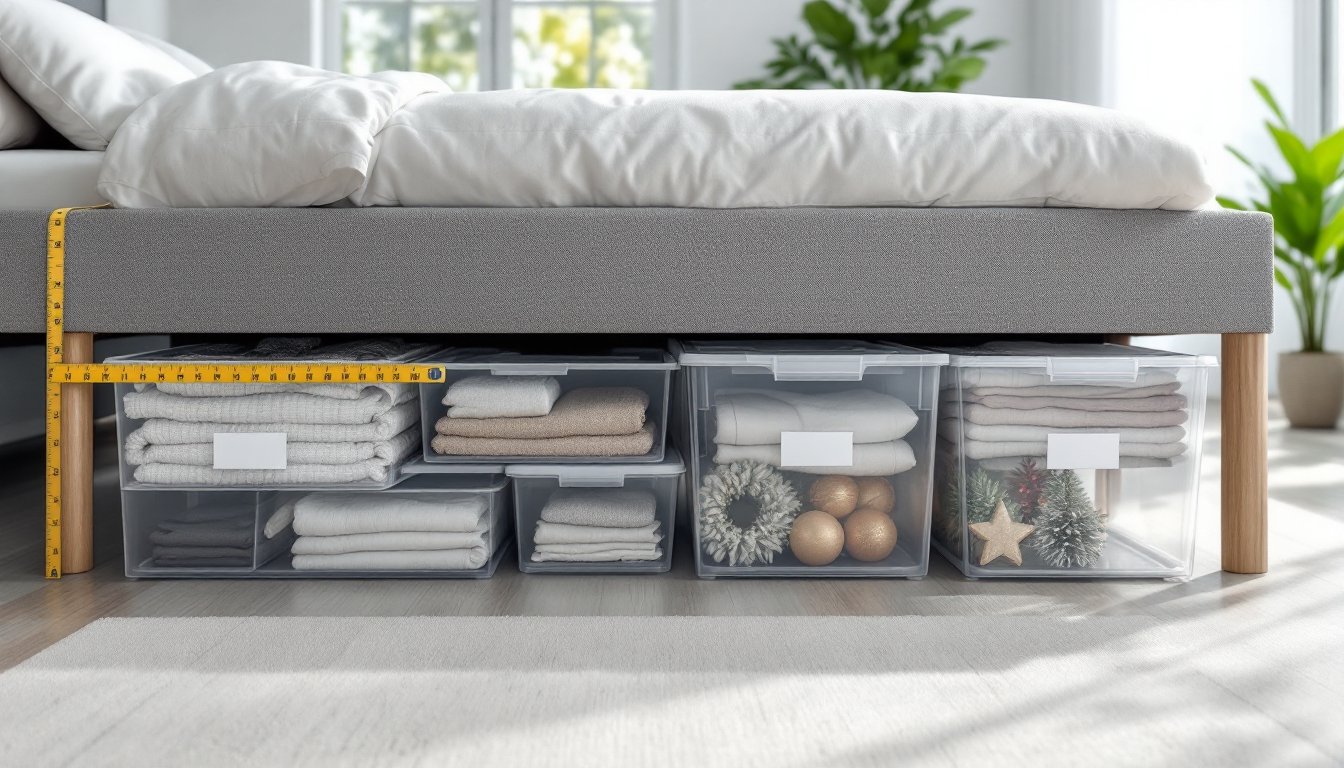
Measure your bed clearance first, it’s not optional. Grab a tape measure and check the height from floor to bed frame underside at the foot and on both sides. Bed frames aren’t always level, and hitting the frame when sliding bins is annoying. Leave at least 1 inch of clearance so bins glide smoothly.
Best Items to Store Under Your Bed
Under-bed storage works best for items that are lightweight, seasonally rotated, or genuinely infrequently needed. Not everything belongs there.
Store these: Off-season clothing (winter coats in summer, shorts in winter), seasonal bedding (extra quilts, flannel sheets), holiday decorations in individual labeled containers, shoes you wear less often, and spare linens you don’t use daily. Fabric storage bins are popular for linens because they’re soft-sided, but rigid plastic bins actually protect delicate fabrics better from dust and crushing.
Don’t store these: Heavy items over 30 pounds per bin (your back will thank you), anything moisture-sensitive without desiccant packets (old photos, documents), food (pests), or items that off-gas in enclosed spaces. Never store paint, chemicals, or anything flammable under a bed, there’s no ventilation. If you have a below bed drawers system with ventilation, you’ve got more flexibility, but standard plastic under-the-bed storage bins don’t breathe.
The rule is simple: if you won’t need it for 3+ months and it fits in your bin footprint, it’s a candidate. Heavier items go on bottom shelves or the floor: lighter stuff can stack on top of bins.
Tips for Maximizing Under-Bed Storage Efficiency
Sliding a bin under a bed and forgetting about it defeats the purpose. A few tactical moves transform under-bed space into genuinely useful storage.
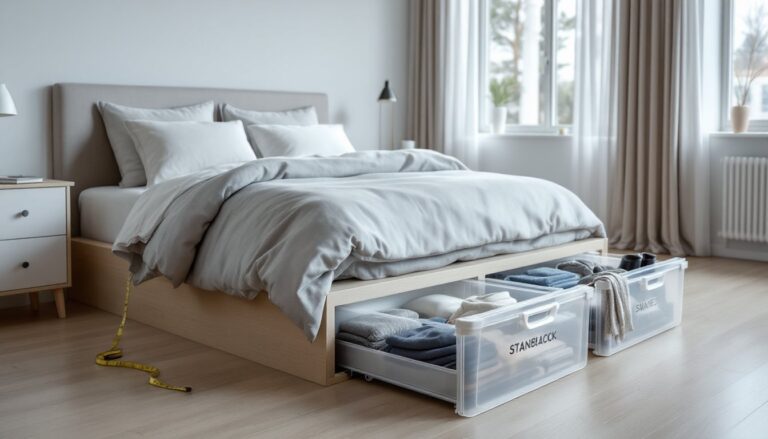
First, measure your bed frame carefully, seriously, pull out the tape. Measure at the foot, each side, and near the headboard. Beds settle unevenly, and a bin that fits at one spot might jam at another. Leave at least 1 to 1.5 inches of clearance for smooth sliding.
Second, choose bins with wheels or handles if you’ll access them regularly. Sliding a 40-pound bin across carpet wears you out fast. Wheels (especially lockable ones) solve this. If you rarely access the contents, handles are enough.
Third, stack strategically. Lightweight seasonal items can go on top of heavier storage. Never stack bins more than two layers high under a bed, you’ll lose access and create a Jenga situation trying to extract something from the bottom.
Fourth, avoid moisture buildup by storing a small silica gel desiccant pack in each bin, especially if your bedroom gets humid. Check them every 6 months and replace as needed (usually $1-3 per pack).
Organization Systems and Labeling Strategies
The difference between functional under-bed storage and forgotten junk piles is a labeling system. Create one that matches your brain.
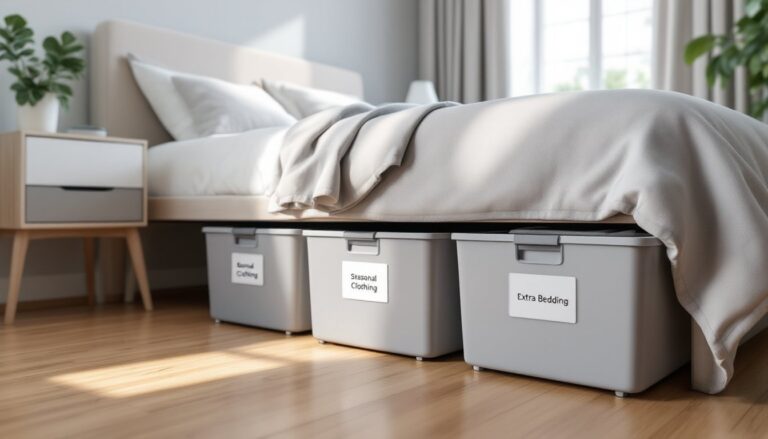
Visual labeling works best for under-bed storage since bins are out of sight. Use a color-coding system: red bins for holiday decor, blue for off-season clothes, green for linens. Pair that with a master list on your phone or posted inside the closet door: “Red bins (left side): Christmas and Halloween decor, 2 bins total.”
Label each bin on multiple sides using a label maker or waterproof tape and permanent marker. If you need to grab a specific bin, you shouldn’t have to squat and crane your neck. Make labels big enough to read from bed height.
Inventory as you pack. Before you seal a bin, snap a photo of its contents and save it in a phone folder labeled “Storage Bins.” Sounds excessive, but it’s a 30-second investment that saves 20 minutes of hunting.
Keep a master document (Google Sheet, notebook, or phone notes) with each bin’s location, contents, and access frequency. This matters more when multiple people live in the space. Before you invest in more under-bed storage bins, check if you’re double-storing items, it happens more often than you’d think.
One final tip: rotate your stock seasonally. When you swap winter for summer clothes, refresh labels and photo inventory. It takes an hour per season but keeps the system honest. Collapsible fabric storage bins work well for this rotation if you’re also exploring alternatives. You might also find that clear storage bins eliminate some labeling work by making contents instantly visible.
If you need additional storage beyond under-bed capacity, options like long storage bins and open front storage bins expand what you can organize. For deeper dives into bin variety, open front stackable storage bins and fabric storage bins each solve specific organizational puzzles. Martha Stewart and The Spruce both offer seasonal organizing guides that complement under-bed strategies. Good Housekeeping’s take on under-bed storage mistakes covers what not to do, definitely worth reviewing before you commit bins to the space.
Conclusion
Plastic under-the-bed storage bins are the unglamorous workhorse of bedroom organization. Measure first, choose bins that match your bed clearance, and label everything immediately. Don’t overthink it, this is one home improvement move where the straightforward approach wins. Start with one or two bins, see how the system works, then expand. Your closet (and your back) will thank you.