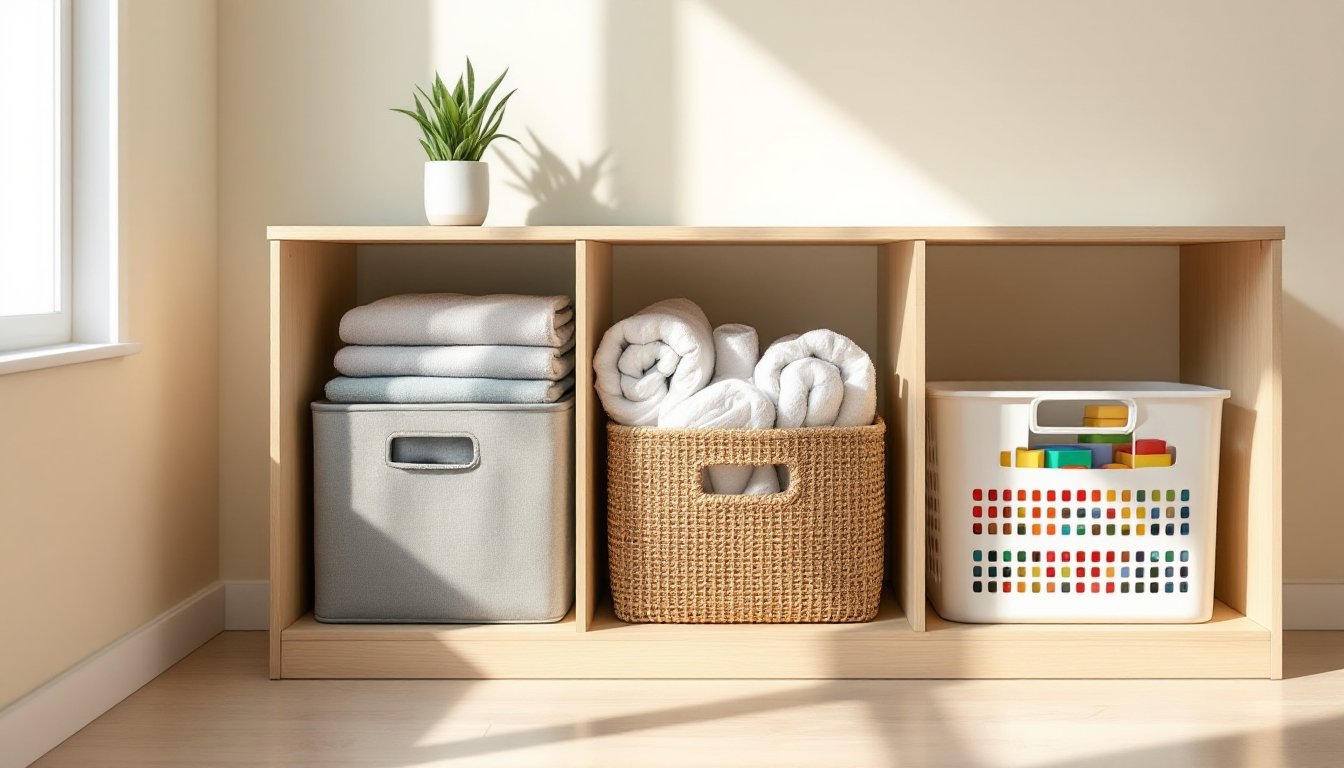
Walk into any big-box store’s organizing aisle and you’ll find dozens of storage bins in wildly varying sizes. But there’s a reason 13×13-inch cube bins have become the industry standard: they’re designed to fit the most common cubby organizers on the market, those modular shelving units with square openings. Whether you’re corralling toys in a kid’s room, organizing office supplies, or hiding clutter in a living room, these bins turn chaotic open shelves into clean, functional storage. They’re not just containers: they’re a system. And when you match the right bin material to the right room, they work even better.
Table of Contents
ToggleKey Takeaways
- 13×13 cube storage bins fit standard cubby organizers perfectly and create visual consistency while transforming open shelving into organized, functional storage spaces.
- Fabric bins are budget-friendly and lightweight ($5–$10 each), while woven bins ($15–$30) offer better durability and weight capacity for permanent installations.
- Match bin material to room conditions: fabric or water-resistant options for bathrooms, rigid plastic for garages, and woven bins for living areas where appearance matters.
- A standard 13x13x13-inch cube holds approximately 1.2 cubic feet, enough for 20–25 children’s books or a full set of craft supplies without sagging over time.
- Enhance your cube bin system with vertical dividers, labeling systems, drawer glides, and wall anchors for safety and maximum accessibility.
- Always measure your exact cube openings before purchasing, as interior dimensions vary (13.5 to 13.75 inches), and bins labeled 13×13 typically measure 12.75–13 inches per side for proper fit.
Why 13×13 Cube Storage Bins Are the Ultimate Organizing Solution
The magic of 13×13-inch cube bins isn’t just their neat appearance, it’s their compatibility. These bins fit standard cubby organizers that typically measure between 13.5 and 14 inches per cube opening, accounting for fabric compression or slight tolerances in rigid bins. This standardization means you can mix and match bins from different manufacturers without worrying about fit.
Unlike generic totes or baskets, cube bins are built to slide smoothly in and out of their designated slots. Most feature built-in handles, fabric loops, cutout grips, or woven pulls, that make retrieval easy even when packed full. The uniform size also creates visual consistency across a room, which matters when you’re displaying multiple cubes on open shelving.
From a practical standpoint, a 13x13x13-inch cube holds approximately 1.2 cubic feet of storage. That’s enough for about 20-25 children’s board books, a winter’s worth of hats and gloves, or a full set of craft supplies. The square footprint maximizes shelf space better than round or irregular bins, and the structured shape prevents sagging over time.
These bins also solve the “out of sight, out of mind” problem with open shelving. Exposed items collect dust and create visual clutter: bins corral the chaos while keeping contents accessible. For renters or frequent redecorators, cube systems offer flexibility, no drilling, no permanent installation, just modular storage that moves with you.
Best Materials for 13×13 Storage Cubes: Fabric, Woven, and Rigid Options
Choosing the right material isn’t about aesthetics alone, it’s about durability, weight capacity, and maintenance. Here’s what works where.
Fabric Bins: Soft, Collapsible, and Budget-Friendly
Fabric cube bins typically use non-woven polypropylene, canvas, or polyester blends. Non-woven polypropylene (the same material in reusable grocery bags) is lightweight, water-resistant, and cheap, expect to pay $5-$10 per bin. Canvas bins cost slightly more but hold up better under repeated handling.
Most fabric bins include a cardboard or plastic insert in the base and sides to maintain shape. Without these inserts, the bins collapse when empty, a feature that’s convenient for storage but annoying if you’re constantly pulling bins in and out. Look for dual handles (usually fabric loops sewn to opposite sides) to prevent ripping when loaded.
Weight capacity matters here. Budget fabric bins typically handle 10-15 pounds before sagging or tearing at the seams. That’s fine for linens, stuffed animals, or clothing but insufficient for books or tools. Check stitching quality around handles and corners: double-stitched seams last longer.
Cleaning is straightforward for most: spot-clean with mild detergent and air dry. Canvas bins can often be machine-washed on gentle cycle, but always remove cardboard inserts first. If you’re storing items in a basement or garage, consider bins with moisture-resistant linings or skip fabric altogether.
Woven and Wicker Bins: Stylish and Durable
Woven bins, whether natural wicker, seagrass, water hyacinth, or synthetic rattan, bring texture and a higher-end look. They’re noticeably sturdier than fabric, with weight capacities often reaching 20-25 pounds. Natural materials like seagrass cost $15-$30 per bin, while synthetic options run slightly cheaper.
The tradeoff is weight and flexibility. Woven bins don’t collapse for storage, and they’re heavier when empty (usually 1-2 pounds vs. ounces for fabric). This makes them ideal for permanent installations but awkward for seasonal swaps.
Natural woven materials can shed fibers initially and may attract insects if stored in damp conditions. If you’re using them in a bathroom or mudroom, look for water hyacinth or synthetic rattan, which handle humidity better than untreated seagrass. Dust them regularly with a dry cloth: avoid soaking natural fibers, as they can warp or mildew.
Rigid plastic or wood cube bins are less common at the 13×13 size but worth mentioning for heavy-duty use. Plastic bins with ventilated sides work well in garages or workshops where you need to see contents without pulling the bin out. Wooden bins, often sold as drawer inserts for cube systems, cost $25-$50 but can support 30+ pounds and double as display pieces for entryways or living rooms.
Room-by-Room Storage Ideas with 13×13 Cube Bins
The versatility of cube bins comes from matching material and placement to each room’s demands.
Living Room: Use woven bins for remotes, magazines, and throw blankets in visible cube shelving. The textured finish hides dust better than solid colors and complements wood or neutral furniture. Label bins on the interior spine if you’re storing seasonal items like holiday decor.
Kids’ Rooms: Fabric bins win here for safety (no sharp corners) and ease of use. Assign one bin per toy category, Legos, dolls, art supplies, and use color-coding or picture labels for pre-readers. Stack cubes horizontally at kid height (no taller than 36 inches) to prevent tip-over hazards. For added durability, some fabric storage options offer heavy-duty materials that withstand frequent use.
Home Office: Match bin material to visibility needs. Fabric bins with label pockets work for files, cables, and office supplies you access daily. For archival storage (old tax records, reference binders), rigid bins with lids keep dust out.
Bathroom/Linen Closet: Stick with water-resistant fabric or synthetic woven bins. Roll towels vertically inside bins to maximize space and keep stacks tidy. Avoid natural wicker in high-humidity bathrooms, it’ll warp within months.
Garage/Workshop: Skip fabric unless bins are elevated off the floor. Concrete wicks moisture, and fabric bins on a garage floor will mildew. Ventilated plastic bins or metal wire baskets work better for paint supplies, automotive fluids (in secondary containment), and hardware. If your cube system is in the garage, anchor it to wall studs with L-brackets, unsecured shelving can tip under uneven weight.
How to Choose the Right 13×13 Cube Bins for Your Space
Before buying, measure your cube openings, not all “13×13” systems are identical. Some cube organizers have interior dimensions of 13.5 inches, others 13.75 inches. Bins labeled 13×13 typically measure 12.75 to 13 inches on each side to allow clearance. A bin that’s even a quarter-inch too large won’t slide in smoothly.
Check the depth as well. Standard cube depth is 13 inches, but some shallow shelving units are only 11 inches deep. If your bins are deeper than the shelf, they’ll protrude awkwardly. Most product listings specify all three dimensions (width x depth x height), don’t assume “cube” means perfectly square.
Consider whether you need bins with handles or cutouts. Handles make retrieval easier but reduce interior volume slightly and can snag on adjacent bins. Cutout grips (rectangular openings in the front panel) maintain clean lines and work well in tight cube arrays.
For open shelving in living areas, where appearance matters, coordinate bin color or material with the room’s palette. Neutral tones (gray, beige, white) disappear into the background: bold colors or patterns turn bins into decor. Interior design resources like Martha Stewart often feature cube storage styling tips that balance function and aesthetics.
If you’re storing heavy items (books, tools, canned goods), prioritize rigid construction over style. Check product specs for weight capacity, anything under 15 pounds is too light for dense materials. For fabric bins, reinforced bottoms and corner stitching are non-negotiable.
Creative Ways to Maximize Your Cube Storage System
Once you’ve installed cube bins, a few tricks amplify their usefulness.
Vertical dividers: Drop a piece of 1/4-inch plywood or hardboard cut to 12.5 x 12.5 inches inside a bin to create two compartments. This works especially well for organizing craft supplies, cables, or small tools that would otherwise jumble together.
Drawer conversion: Some manufacturers sell drawer glides that attach to cube frames, letting you slide bins out like drawers. This costs $10-$15 per cube but dramatically improves accessibility for lower cubes. Alternatively, mount the cube unit on locking casters (rated for at least 50 pounds per caster) to create a mobile storage cart.
Labeling systems: Adhesive chalkboard labels or clear label holders (the kind that slip into a frame sewn onto the bin) keep contents identified without permanent marking. For kids’ rooms, print picture labels, a photo of Legos, blocks, or books, so non-readers can clean up independently. Home improvement platforms like The Spruce frequently publish labeling and organization guides.
Nested bins: If you have deep cubes (15+ inches), place a smaller bin or basket inside the main cube to create a two-tier system. Store less-used items in back, frequently accessed items up front.
DIY fabric bins: For those with basic sewing skills, making custom cube bins is surprisingly straightforward. You’ll need about 1 yard of fabric per bin (44-inch width), fusible interfacing for structure, and a sewing machine. Free patterns are available online, including detailed instructions for sewing cube storage bins that fit standard 13×13 openings. Homemade bins let you match exact colors or use specialty fabrics (water-resistant nylon, heavy canvas) that aren’t available commercially.
Anchor for safety: If your cube system is taller than 30 inches or accessible to children, secure it to wall studs with furniture anchors or L-brackets. Even a loaded cube unit can tip forward if a child climbs on it. Drill pilot holes into studs (typically 16 inches on center), then attach brackets with 3-inch wood screws. This is especially critical for freestanding units that aren’t backed against a wall.
For multi-cube systems in high-traffic areas, consider non-slip shelf liner on the bottom of each bin to prevent shifting. A 12-inch square of rubberized liner costs pennies and keeps bins from sliding when you’re pulling adjacent ones out.