
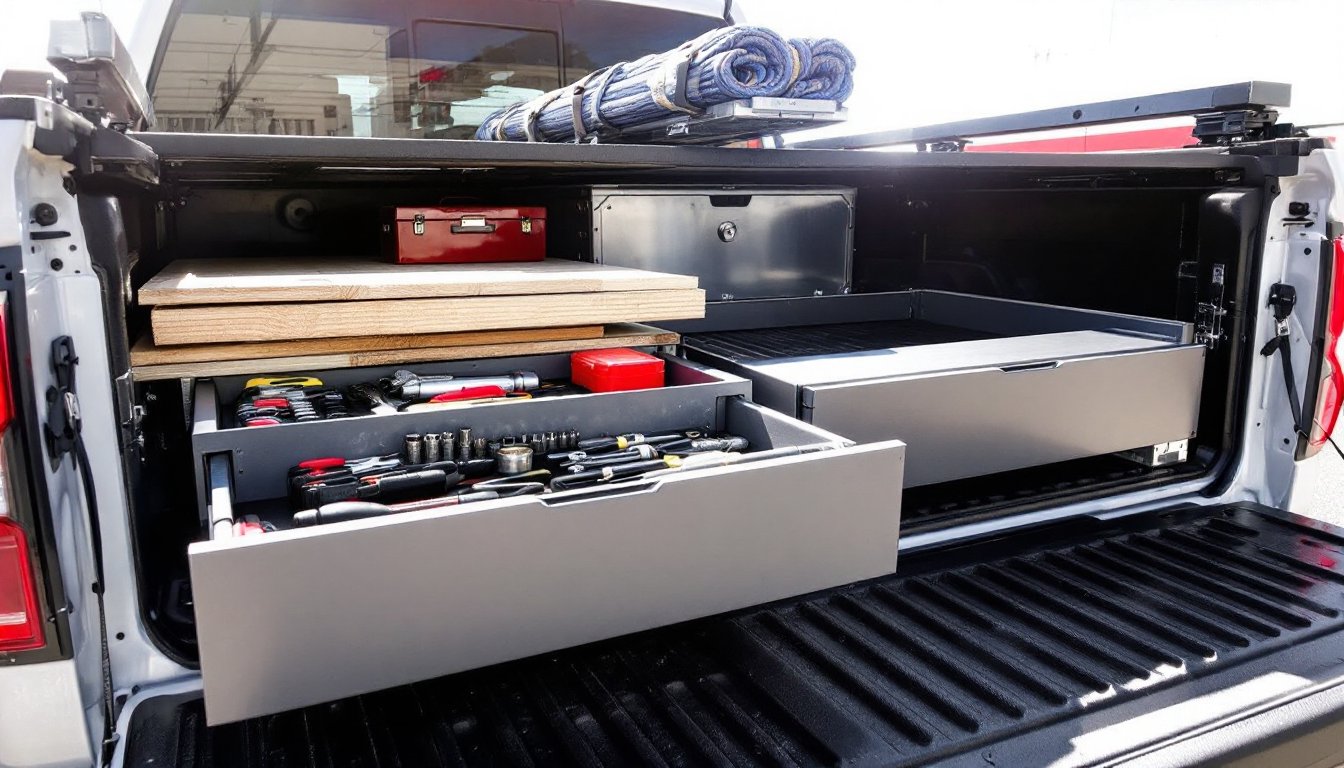
A pickup truck with a chaotic, jumbled bed is like a toolbox with no dividers, everything you need is in there somewhere, buried under everything else. Whether hauling work gear, camping equipment, or weekend project supplies, a well-organized truck bed saves time, protects cargo, and makes loading and unloading far less frustrating. Truck bed storage systems transform that open cargo area into a functional workspace with dedicated compartments, secure drawers, and quick-access zones. This guide breaks down the types of storage systems available, what to consider before buying, and how to install them yourself without paying a shop rate.
Table of Contents
ToggleKey Takeaways
- Truck bed storage systems provide three critical benefits: security through lockable drawers and toolboxes, protection from weather and corrosion, and reclaimed vertical space that maximizes cargo capacity without sacrificing accessibility.
- Drawer systems, crossover toolboxes, and cargo rails each serve different needs—choose drawer systems for organized compartmentalized storage, crossover boxes for general items, or cargo rails for flexible loads and budget-conscious buyers.
- Proper installation of truck bed storage requires careful measurement, backing plates for weight distribution, thread locker for vibration resistance, and adherence to manufacturer torque specifications to avoid damaging the bed floor.
- Weight capacity varies significantly across storage types: aluminum drawer systems handle 200–300 pounds per drawer, steel systems support 400+ pounds, and plastic toolboxes max out around 75 pounds, so always verify specs before loading.
- Budget ranges from $150–$300 for basic cargo rails to $800–$2,500 for full-length drawer systems, with crossover toolboxes falling in between, allowing truck owners to match investment to actual use case and cargo frequency.
- Regular maintenance including annual silicone lubrication of drawer slides, periodic hardware tightness checks, and drain hole cleaning ensures your truck bed storage system lasts the life of the vehicle.
Why Invest in a Truck Bed Storage System?
Unorganized truck beds lead to damaged tools, lost small parts, and wasted cargo space. A storage system addresses all three problems.
Security is the first benefit. Drawer systems and lockable toolboxes keep valuables out of sight and protected from theft. Loose items in an open bed are an easy target, especially in parking lots or job sites. Locking mechanisms (keyed or combination) add a layer of deterrent that bed covers alone can’t match.
Protection from the elements comes next. Even with a tonneau cover, rain, snow, and road spray can seep into an open bed. Sealed storage compartments with weatherproof gaskets keep tools, electronics, and gear dry. This matters for anyone carrying power tools, camping equipment, or anything that rusts or corrodes.
Efficiency is the third advantage. Instead of digging through a pile of gear to find a single socket wrench, a storage system puts everything in its place. Drawer dividers, adjustable compartments, and cargo rails let users customize layouts for specific needs, contractors can separate fasteners from hand tools, while overlanders can organize recovery gear and camp supplies.
Finally, storage systems reclaim vertical space. Full-length drawer systems sit at bed floor level, leaving room above for larger cargo like lumber, ladders, or bikes. This dual-use approach maximizes capacity without sacrificing accessibility.
Types of Truck Bed Storage Systems
Choosing the right storage setup depends on how the truck gets used. Some systems prioritize security, others focus on modularity, and a few do both.
Drawer Systems for Secure Organization
Full-length drawer systems are the heavy hitters of truck bed storage. These units install at bed floor level and feature one or more wide drawers that slide out on heavy-duty ball-bearing or roller tracks. Most are built from aluminum or steel with a powder-coated finish to resist corrosion.
Drawer systems typically span the full width of the bed (around 60 inches for a standard 6.5-foot bed) and sit 12 to 18 inches tall, depending on the model. The top surface remains flat, so users can still haul plywood, toolboxes, or cargo on top. Drawers lock independently, and many models include adjustable dividers or removable trays for small parts.
Installation requires drilling into the bed floor or using a clamp-on mounting system that attaches to the bed rails. Some systems tie into the truck’s existing tie-down points for added stability. Weight capacity varies, most handle 200 to 400 pounds per drawer when fully extended, but check the manufacturer’s specs before loading heavy items.
Drawer systems shine for contractors, tradespeople, and serious DIYers who need organized, lockable storage without giving up cargo space. They’re also popular with overlanders who want secure storage for recovery gear, camp kitchens, and tools. Many systems designed for overland storage boxes integrate with roof racks and other adventure gear.
Toolboxes and Storage Chests
Crossover toolboxes sit behind the cab and span the width of the bed, usually mounted on the bed rails. They’re the most common truck storage solution and come in several materials: aluminum (lightweight, corrosion-resistant), steel (heavy-duty, dent-resistant), and plastic or polymer (affordable, weather-resistant).
Standard crossover boxes measure 60 to 72 inches wide, 12 to 20 inches deep, and 16 to 20 inches tall. They typically feature a single lid (some split in the middle for easier access) with a keyed or push-button lock. Gas struts or torsion bars support the lid when open.
Installation is straightforward: most models bolt or clamp to the bed rails using U-bolts or mounting brackets. No drilling into the bed itself is required, which appeals to truck owners who want to avoid permanent modifications.
Crossovers work well for general storage, hand tools, tie-downs, jumper cables, and other items that don’t need compartmentalization. They’re less ideal for small parts or items that need frequent access, since everything goes into one big bin.
Side-mount toolboxes (also called side bins or wheel well boxes) fit along the bed rails or over the wheel wells. They’re narrower than crossovers, typically 12 to 18 inches wide, but leave the center of the bed open for larger cargo. Side boxes install with brackets or clamps and work well as secondary storage for smaller items or as add-ons to drawer systems. Tutorials for custom DIY projects often include plans for modular side-mount boxes.
Cargo Management Rails and Dividers
Cargo rail systems don’t provide enclosed storage, but they maximize organization and versatility. These systems consist of aluminum or steel tracks mounted to the bed floor or walls, with adjustable tie-down cleats, dividers, and accessory mounts that slide and lock into place.
Rail systems (like those from brands offering modular truck bed gear) let users create custom cargo zones. Adjustable dividers keep gear from sliding around during transport, while movable tie-down points secure loads without needing to drill new anchor holes. Accessory mounts can hold cargo nets, cup holders, tool racks, or even bike mounts.
Installation varies by system. Some require drilling into the bed floor and installing backing plates underneath for strength. Others use existing stake pocket holes or bed rail bolt points. Either way, installation is a half-day project with basic hand tools, socket set, drill, and measuring tape are the essentials.
Cargo rails suit truck owners who haul varied loads and want flexibility over fixed compartments. They’re also a good entry point for DIYers who aren’t ready to commit to a full drawer system or crossover box. Pairing cargo rails with soft-sided storage bags or modular storage solutions creates a budget-friendly organizational setup.
How to Choose the Right Storage System for Your Needs
Matching a storage system to actual use cases prevents buyer’s remorse. Start by listing what gets carried most often and how frequently it’s accessed.
Security needs come first. If the truck parks in public areas or job sites, lockable storage is non-negotiable. Drawer systems and crossover toolboxes with keyed or combination locks offer the best theft deterrence. Cargo rails alone won’t secure valuables unless paired with lockable bins.
Cargo variety matters next. Contractors carrying a wide range of hand tools, fasteners, and small parts benefit from drawer systems with dividers. Weekend warriors hauling camping gear, coolers, and bikes may prefer a crossover toolbox or cargo rails that leave the bed center open.
Truck bed dimensions affect compatibility. Measure the bed length (5.5-foot, 6.5-foot, or 8-foot are standard) and width between the wheel wells (usually 48 to 51 inches). Most storage systems list exact fitment by truck make, model, and year. Check clearance if running a tonneau cover, some low-profile covers conflict with tall toolboxes or drawer systems.
Weight capacity is critical for heavy-duty use. Aluminum drawer systems typically handle 200 to 300 pounds per drawer, while steel systems can manage 400 pounds or more. Crossover toolboxes vary widely, plastic models may max out at 75 pounds, while heavy-duty steel boxes handle 200+ pounds. Always check the manufacturer’s specs and avoid exceeding rated capacity, which can damage slides or mounting hardware.
Weather exposure influences material choice. Aluminum resists corrosion and works well in wet climates or coastal areas. Steel is tougher but requires powder coating or regular maintenance to prevent rust. Plastic toolboxes are the most weather-resistant but less durable under heavy use. Gasket seals and drain plugs help manage moisture inside enclosed compartments. Reviews on sites like Popular Mechanics often highlight real-world weather performance.
Budget is the final factor. Basic cargo rails start around $150 to $300. Crossover toolboxes range from $200 for plastic models to $600+ for aluminum or steel. Full-length drawer systems are the most expensive, typically running $800 to $2,500 depending on size, material, and features. DIY builds using plans from workshop resources can cut costs but require time, tools, and fabrication skills.
Installation Tips for DIY Truck Bed Storage
Most truck bed storage systems install with basic hand tools and a free afternoon. Here’s what to expect.
Tools and materials needed:
- Socket set (metric and SAE) with ratchet and extensions
- Drill and drill bits (if mounting requires new holes)
- Torque wrench (for bed floor bolts)
- Measuring tape and carpenter’s pencil
- Painters tape (for marking drill points)
- Thread locker (medium-strength, like blue Loctite)
- Safety glasses and work gloves
Step 1: Clean the bed thoroughly. Remove all debris, dirt, and loose rust. If installing a drawer system, inspect the bed floor for damage or rust-through. Patch or reinforce weak spots before mounting heavy storage. A pressure washer speeds up cleaning, but a stiff brush and soapy water work fine.
Step 2: Test-fit the system. Place the storage unit in the bed without fastening it. Check clearance at the tailgate, cab, and wheel wells. If installing a crossover toolbox, ensure the lid opens fully without hitting the cab or any existing bed accessories (like bed extenders or bike racks). Mark mounting points with painters tape, this makes drilling precise and prevents mistakes.
Step 3: Drill carefully (if required). For drawer systems or cargo rails that mount to the bed floor, double-check measurements before drilling. Drill from the top down, using a center punch to prevent bit walking. Deburr holes with a countersink bit or file to prevent sharp edges. If drilling through a plastic bed liner, remove or cut away the liner at mounting points to ensure metal-to-metal contact for structural integrity.
Step 4: Install backing plates (if applicable). Drawer systems under load require backing plates or washers underneath the bed floor to distribute weight and prevent bolt pull-through. Access underneath by crawling under the truck or removing the spare tire for better reach. Use a torque wrench to tighten bed floor bolts to the manufacturer’s spec (usually 15 to 25 ft-lbs). Over-tightening can crack the bed floor or strip threads.
Step 5: Apply thread locker and check all fasteners. Once mounted, apply medium-strength thread locker to bolts and check that all mounting hardware is snug. This prevents loosening from vibration and rough roads. Let thread locker cure for at least an hour before loading the system.
Step 6: Test drawer slides and locks. If installing a drawer system, extend and retract each drawer several times to check for binding or misalignment. Adjust mounting bolts if needed. Test locks to ensure smooth operation and proper latch engagement.
Common mistakes to avoid:
- Drilling without measuring twice. Misplaced holes can’t be undone.
- Skipping backing plates on drawer systems. This leads to bolt pull-through and damaged bed floors.
- Over-tightening bolts on aluminum beds. Aluminum is softer than steel and threads strip easily.
- Installing storage systems with a tonneau cover without checking clearance. Some covers won’t close if the storage sits too high.
Most installations take 2 to 4 hours for a solo DIYer, less with a helper. If the truck has a spray-in bed liner, installation is straightforward. Drop-in liners may need trimming or removal at mounting points. Composite or wood bed floors (common on older trucks) require extra care, pre-drill pilot holes and avoid over-tightening to prevent cracking.
Once installed, a quality storage system can last the life of the truck with minimal maintenance. Lubricate drawer slides annually with dry silicone spray, inspect mounting hardware for looseness after the first few hundred miles, and clean drain holes in toolboxes to prevent water buildup. A well-organized truck bed pays dividends every time the tailgate drops.