Small bathrooms pack a big challenge: finding storage when every square inch counts. Cramming toiletries under the sink or stacking towels on the toilet tank isn’t a strategy, it’s a surrender. The fix isn’t a gut renovation or knocking down walls. It’s smart shelving, strategically placed to turn wasted vertical space, dead corners, and overlooked niches into functional storage. This guide walks through five proven shelving approaches that work in tight quarters, from over-the-toilet units to recessed cubbies. Each one solves a specific layout problem without eating up precious floor space.
Table of Contents
ToggleKey Takeaways
- Small bathroom shelving solutions climb walls instead of consuming floor space, making vertical storage the most practical approach for cramped bathrooms.
- Over-the-toilet shelving units are affordable, easy to install, and unlock the most underutilized storage zone in small bathrooms with minimal renovation needed.
- Floating corner shelves and narrow ladder shelves reclaim dead space without drilling, offering flexible options for renters or rooms with challenging wall conditions.
- Recessed shelving built between wall studs provides premium, permanent storage that’s flush with surfaces, though it requires moderate carpentry skills or professional installation.
- Moisture-resistant materials like powder-coated steel, bamboo, teak, and tempered glass ensure small bathroom storage shelves withstand humidity and last longer.
- Strategic shelf placement above doors, windows, and in shower niches maximizes every usable inch while maintaining visual flow and preventing the bathroom from feeling cramped.
Why Shelving Is the Ultimate Small Bathroom Storage Solution
Shelving beats cabinets and floor-standing organizers in small bathrooms for one reason: it climbs walls instead of eating floor space. Every inch of usable floor area matters when the room measures 5 feet by 8 feet or smaller, the standard size for many half-baths and apartment bathrooms.
Open shelves also create visual flow. Solid cabinet doors chop up sight lines and make cramped spaces feel even tighter. A set of floating shelves or a sleek metal rack keeps the eye moving, which tricks the brain into perceiving more room.
From a practical standpoint, shelves cost less and install faster than built-in cabinetry. A basic three-tier chrome wire shelving unit runs $30 to $60, mounts in under an hour with a drill and level, and holds towels, toiletries, and cleaning supplies without a custom carpenter. For renters, damage is minimal, just a few anchor holes to patch on move-out.
The key is matching shelf type to available wall real estate. Some bathrooms have a blank wall above the toilet: others offer only corners or narrow gaps beside the vanity. The following sections break down specific shelving strategies for each scenario.
Over-the-Toilet Shelving Units
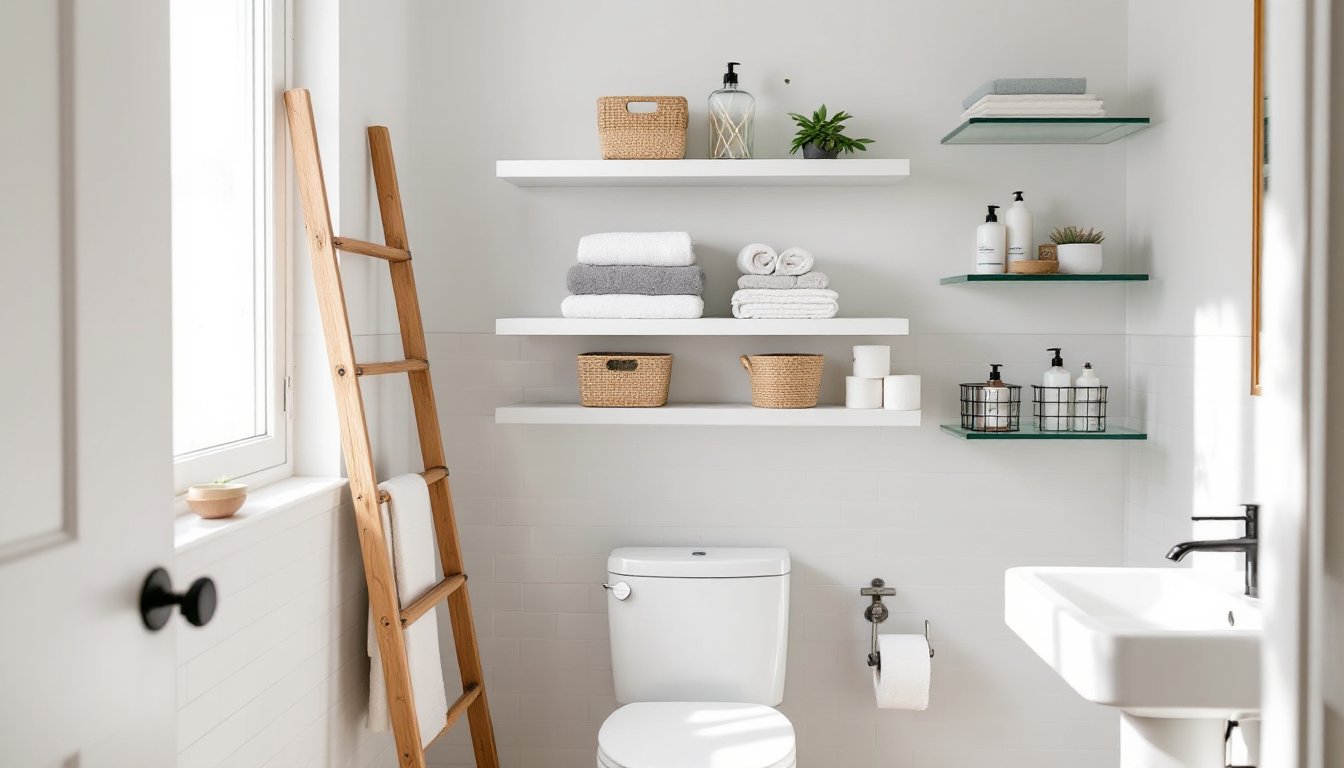
The space above the toilet is the most underused zone in a small bathroom. It’s 24 to 30 inches wide and often 3 to 4 feet of clear vertical run, perfect for a dedicated shelving unit.
Freestanding ladder-style units are the easiest install. They straddle the toilet tank with two legs and offer three to four shelves. Look for powder-coated steel or bamboo frames: both resist humidity better than particleboard. Assemble per instructions, level the unit, and optionally anchor the top to wall studs with L-brackets if kids or pets are in the house.
Wall-mounted floating shelves give a cleaner look. Use a stud finder to locate framing (typically 16 inches on center), then mount ¾-inch plywood or solid wood shelves on heavy-duty brackets rated for at least 50 pounds. Space shelves 12 to 14 inches apart to fit folded towels, wicker baskets, or apothecary jars. If studs don’t align where you want shelves, use toggle bolts in drywall, each toggle holds roughly 50 pounds in ½-inch drywall.
For a polished finish, paint shelves with semi-gloss or satin latex paint to handle moisture and wipe-downs. Matte finishes look great but show water spots.
One caution: keep the lowest shelf at least 6 inches above the toilet tank to avoid head-bonking when someone leans back. Measure twice, mount once. Many homeowners also appreciate the approach used in open shelving installations, which prioritize easy access and visual appeal.
Floating Corner Shelves to Reclaim Dead Space
Corners trap dead space. A 90-degree junction of two walls can’t fit a standard rectangular shelf without blocking door swing or bumping elbows at the sink. Floating corner shelves solve this by hugging the angle and staying out of traffic paths.
These come in two formats: triangular glass or wood shelves with concealed brackets, and tiered wire baskets that hang from a single vertical pole. Glass shelves (typically ⅜-inch tempered glass) look sleek and reflect light, making tiny bathrooms feel airier. Wire baskets are utilitarian but hold more weight and drain water if used in the shower.
Installation requires hitting at least one stud. Measure the corner height, mark level lines with a 4-foot level or laser level, then drill pilot holes for brackets. If only one wall has a stud where you need it, use a heavy-duty toggle bolt on the other side. Each bracket should support at least 25 pounds for safe storage of toiletries and hand towels.
Spacing matters. Set shelves 10 to 12 inches apart vertically to fit shampoo bottles, rolled washcloths, or decorative storage bins. Three-shelf corner units work well in standard 8-foot ceiling bathrooms: taller ceilings can accommodate four shelves without crowding.
Pair corner shelves with small baskets or bins to corral loose items like makeup, razors, or cotton swabs. Woven seagrass or wire mesh baskets add texture without visual clutter. This tactic mirrors strategies from small-space organization plans that prioritize vertical storage and accessibility.
Narrow Ladder Shelves for Tight Layouts
When wall-mounting isn’t an option, rental restrictions, tile walls, or lack of studs in the right spot, freestanding ladder shelves deliver storage without drilling.
These units lean against the wall at a 10- to 15-degree angle and typically measure 18 to 24 inches wide, fitting into gaps beside the vanity, next to the tub, or in a narrow alcove. The angled stance keeps the footprint small: most ladder shelves occupy just 12 to 16 inches of floor depth at the base.
Choose materials that handle humidity. Powder-coated aluminum resists rust and wipes clean. Teak or eucalyptus withstand moisture naturally (they’re used in outdoor furniture for good reason). Skip unfinished pine or MDF unless the bathroom has a strong exhaust fan and low humidity, untreated wood swells and warps in damp environments.
Ladder shelves offer three to five tiers. Use lower shelves for heavier items like bulk toilet paper or a laundry hamper: reserve upper shelves for lightweight toiletries and decor. For stability, anchor the top of the ladder to the wall with a single L-bracket or furniture strap, especially if toddlers are around.
Keep the base at least 6 inches from the shower curtain to avoid water splash. If the ladder sits near the sink, protect the floor with a small bath mat to catch drips from wet hands reaching for towels. Those seeking more compact storage options may also consider slim vertical cabinets that maximize height in constrained spaces.
Built-In Recessed Shelving in Showers and Walls
Recessed shelving cuts into the wall cavity between studs, creating storage that’s flush with the surface, zero intrusion into room space. This is the premium option and requires moderate carpentry skills (or a pro), but the payoff is clean, permanent storage.
Shower niches are the most common application. Standard framing uses 2×4 studs spaced 16 inches on center, leaving a cavity roughly 14½ inches wide (actual stud spacing minus the stud thickness). A single-bay niche fits one column of shampoo bottles and soap. For a double-wide niche, you’ll need to cut one stud and add a header and footer for structural support, this crosses into modification territory that may need a permit if it’s a load-bearing wall. Consult local building codes and consider hiring a licensed contractor for load-bearing alterations.
Once the cavity is framed, line it with cement backer board (not drywall), then waterproof with a liquid membrane or sheet membrane system (brands like RedGard or Kerdi are common). Tile the interior to match the shower walls, sloping the niche bottom ⅛ inch per foot toward the front edge so water drains instead of pooling.
Bedroom or hallway walls can also hide recessed shelves. Between studs, you can install shallow cubby shelves for toiletries, toilet paper, or decorative items. Frame the opening, add horizontal shelf supports, and finish with trim or bullnose tile. Paint the interior a contrasting color or add LED strip lighting for a boutique hotel vibe.
Safety and code notes: Never recess into exterior walls (you’ll cut through insulation and vapor barriers). Avoid plumbing or electrical chases. If unsure whether a wall is load-bearing, hire a structural engineer for an assessment, cutting the wrong stud can cause sagging floors or ceiling cracks. Homeowners also embrace related space-saving ideas to optimize storage without major renovations.
Above-the-Door and Window Ledge Shelves
The wall above the bathroom door rarely holds anything besides cobwebs, yet it’s often 12 to 18 inches of depth and the full width of the door frame, prime real estate for a long, shallow shelf.
Mount a single floating shelf or a narrow box shelf (with sides and back) using brackets screwed into the door header framing. The header is solid lumber (usually a double 2×4 or 2×6), so it holds weight reliably. A shelf here works for backup toilet paper, extra hand towels, or rarely used items like guest toiletries.
Keep the shelf at least 2 inches above the door trim for visual clearance. Use a stud finder to confirm framing location, drill pilot holes, and mount with 3-inch wood screws. If the shelf holds anything heavy (more than 20 pounds), add a center bracket for support.
Window ledge shelves are another overlooked zone. If the bathroom has a window with a sill, add a slim shelf just above or beside it to hold small plants, candles, or a toothbrush holder. Use L-brackets or a tension-mounted shelf if the window trim is decorative and you don’t want visible hardware.
Both options keep items out of the main activity zones while adding vertical storage. Just avoid blocking natural light or ventilation, bathrooms need airflow to manage humidity. Pair this approach with creative storage solutions that make the most of every surface. For more small-space inspiration, sites like Apartment Therapy offer extensive galleries of real-world bathroom makeovers.
Conclusion
Small bathrooms don’t need more floor space, they need smarter use of walls, corners, and overlooked zones. By stacking storage vertically with over-toilet units, tucking shelves into corners, leaning ladder racks in tight gaps, carving recessed niches, and claiming the space above doors, even a 40-square-foot bathroom can hold everything without feeling like a storage locker. Measure carefully, match materials to humidity levels, and don’t skip the level, crooked shelves broadcast amateur hour. With the right shelving strategy, that cramped bathroom transforms into an organized, functional space.