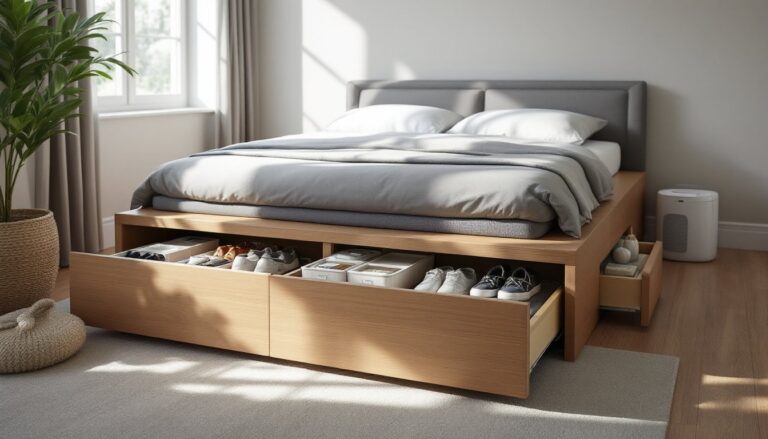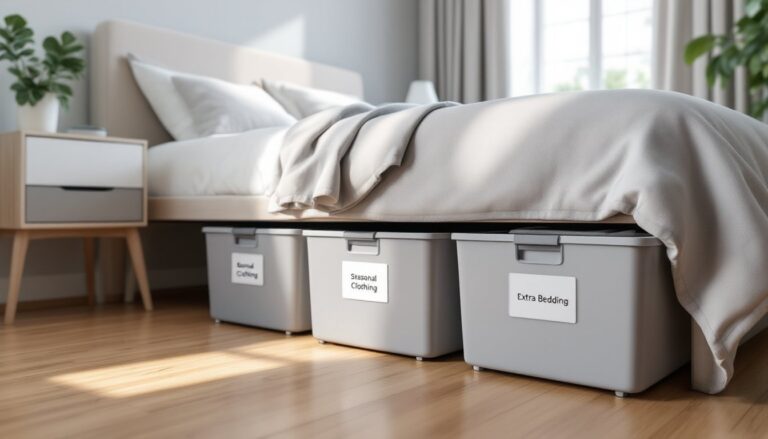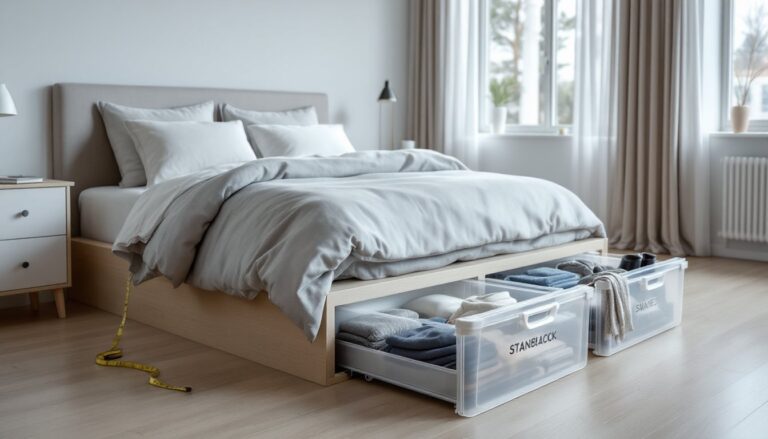
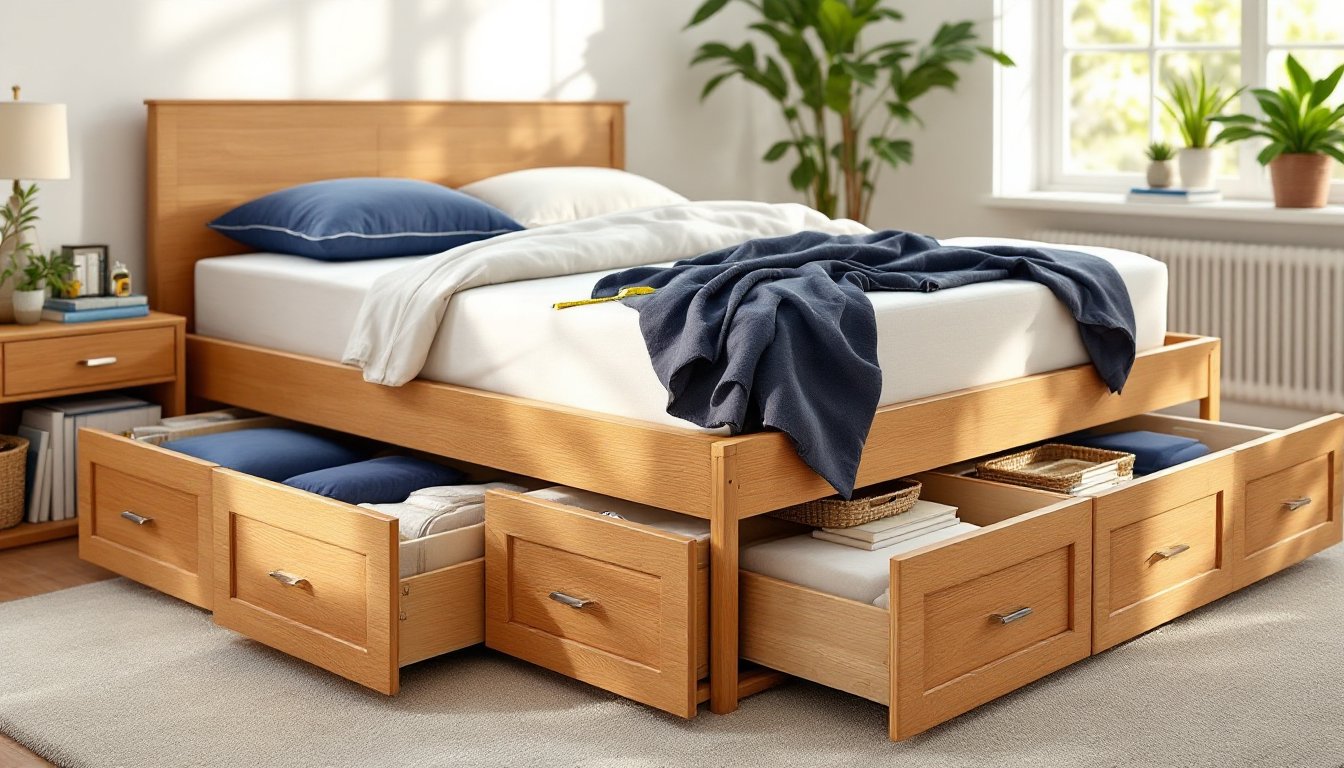
A full size captain’s bed solves two problems that plague most bedrooms: wasted space beneath the mattress and not enough storage for seasonal clothes, linens, or off-season gear. Unlike traditional bed frames that leave a dark void under the box spring, captain’s beds integrate drawers, shelves, or cubbies directly into the frame structure. This design originated on ships, where every square inch counted and crew quarters doubled as storage lockers. Today’s versions bring that same efficiency to tight city apartments, kids’ rooms, and guest bedrooms where closet space runs short.
Table of Contents
ToggleKey Takeaways
- A full size captain’s bed with storage reclaims underbed real estate by integrating 6 to 12 drawers or shelves directly into the frame, providing storage equivalent to a small dresser without expanding floor space.
- Captain’s beds sit 12 to 16 inches off the floor with frames extending to approximately 60 by 80 inches total, requiring careful room measurement and at least 24 inches of clearance around the bed for comfortable movement.
- Solid wood frames offer better longevity and screw-holding strength than MDF or particleboard, especially for renters or those who move frequently and need repeated disassembly.
- Drawer-based captain’s beds work best for seasonal items and weekly-access storage, while open shelving and bookcase designs provide easier access but require regular maintenance to prevent dust and visual clutter.
- Prioritize quality hardware features like metal brackets, ball-bearing slides rated for 75+ pounds, and accurate pilot hole alignment to ensure stability and prevent wobbling or stripped screw holes during assembly.
What Is a Full Size Captain’s Bed with Storage?
A captain’s bed is a platform-style bed frame with built-in storage compartments beneath the sleeping surface. The frame sits higher than a standard bed, typically 12 to 16 inches off the floor, to accommodate drawers, shelves, or open cubbies. There’s no box spring involved: the mattress rests directly on slats or a solid platform supported by the frame structure.
Full size dimensions measure 54 inches wide by 75 inches long for the mattress footprint. The actual frame extends several inches beyond that on all sides to house the storage mechanisms. Most designs add 3 to 6 inches of depth per side for drawer rails or bookcase construction, bringing the total footprint to roughly 60 inches wide by 80 inches long.
The frame itself acts as both support structure and furniture piece. Unlike a Hollywood frame hidden by a bed skirt, captain’s beds showcase finished wood or composite panels on all visible sides. Common materials include solid pine, engineered wood with veneer, or medium-density fiberboard (MDF) with laminate surfaces. Solid wood offers better longevity and screw-holding strength, especially at drawer slide mounting points. MDF costs less but requires careful assembly, overtightened screws can strip the material.
Load-bearing capacity matters more here than with traditional frames. The storage components create weight underneath, and the platform must support both mattress and sleeper without sagging. Quality frames use center support beams and cross slats spaced no more than 3 inches apart to prevent mattress droop and meet most mattress warranty requirements.
Why Choose a Captain’s Bed Over a Traditional Bed Frame
The primary advantage is vertical storage efficiency. A traditional bed frame with a box spring uses roughly 14 inches of vertical space but stores nothing. A captain’s bed uses 12 to 16 inches and adds 6 to 12 drawers or equivalent shelf space, comparable to a small dresser. For a 150-square-foot bedroom, that’s reclaiming underbed real estate without eating into floor space.
Second, it eliminates the need for separate furniture. A full size captain’s bed can replace a nightstand or small dresser, which matters in rooms where a traditional bed plus additional furniture creates cramped traffic lanes. Builders often recommend maintaining at least 24 inches of clearance around the bed for comfortable movement. By consolidating storage, the bed itself frees up wall space for other uses.
Stability is another factor. Platform beds distribute weight across the entire frame rather than concentrating it on corner posts and side rails. This makes them less prone to squeaking and shifting, especially on uneven floors. The integrated storage adds mass and rigidity, a fully loaded drawer base resists lateral movement better than a hollow frame.
One trade-off: accessibility. Retrieving items from underbed drawers requires crouching or kneeling. Traditional frames with open space underneath allow someone to slide bins in and out while standing. For users with mobility limitations, this difference matters. Drawer-style storage works best for items accessed weekly or monthly, seasonal clothing, extra bedding, or out-of-rotation shoes, not daily-use items like pajamas.
Another consideration is assembly complexity. Captain’s beds ship as flat-pack furniture with 30 to 50+ pieces depending on configuration. Expect 2 to 4 hours of assembly time with two people. A cordless drill with magnetic bit holders speeds up the process: doing it by hand with an Allen wrench is tedious. Traditional bed frames typically assemble in under an hour with fewer parts.
Types of Storage Options in Full Size Captain’s Beds
Captain’s beds fall into two main storage categories: drawer-based and open shelving. Each suits different needs and room layouts.
Drawer Storage Configurations
Drawer designs range from three large drawers on one side to six smaller drawers split evenly between both sides. The most common setup uses three drawers per side for a total of six, each measuring roughly 24 inches wide by 16 inches deep by 6 inches tall. That’s enough space for folded sweaters, jeans, or queen-size sheet sets.
Drawer slides come in two types: metal ball-bearing slides and wooden glides. Ball-bearing slides (like those from DIY furniture projects) handle heavier loads and glide smoother, but they cost more and require precise installation, misaligned slides bind or derail. Wooden glides work fine for lighter loads and cost less, but they can swell in humid climates and stick. If building a custom captain’s bed, invest in full-extension slides rated for at least 75 pounds per drawer.
Some designs incorporate hydraulic lift storage instead of drawers. The entire mattress platform hinges upward on gas struts, revealing a cavernous storage bay underneath. This approach maximizes cubic footage, useful for storing bulky items like comforters or luggage, but it requires clearing the mattress surface completely to access anything. It also demands a six-inch clearance behind the headboard for the hinge mechanism.
Drawer fronts should match the bedroom’s aesthetic. Shaker-style panels suit traditional or farmhouse rooms, while flat-front designs with integrated pulls fit modern spaces. Hardware matters: recessed pulls or edge-grip cutouts prevent stubbed toes during middle-of-the-night bathroom trips.
Bookcase and Shelving Designs
Bookcase captain’s beds replace enclosed drawers with open cubbies or shelves at the foot and sometimes along the sides. A typical footboard bookcase adds 12 inches of depth and creates six to nine cubbies, each approximately 10 inches wide by 12 inches tall. These work well for displaying books, storing shoes, or organizing craft supplies in labeled bins.
Open storage offers easier access than drawers, grab what’s needed without bending as far, but it collects dust and creates visual clutter if not maintained. Fabric bins or wicker baskets keep contents hidden while allowing quick retrieval. When using baskets, measure the cubby dimensions first: many mass-market storage bins come in 11-inch widths that don’t fit standard 10-inch cubbies.
Some hybrid designs combine drawers on the sides with a bookcase footboard. This layout works in rooms where one side of the bed sits against a wall, making side drawers inaccessible. The footboard storage remains reachable regardless of bed placement.
A less common variation uses pegboard or slatwall panels in the footboard, allowing adjustable hooks and shelves. This suits teens’ rooms or craft spaces where storage needs shift frequently. Home improvement tutorials on sites like Instructables often feature custom pegboard captain’s bed builds.
How to Choose the Right Full Size Captain’s Bed for Your Space
Start by measuring the room and planning traffic flow. A full size bed occupies roughly 54 by 75 inches, but the captain’s bed frame extends that to approximately 60 by 80 inches with storage. Add the recommended 24 inches of clearance on sides where people walk, plus 36 inches in front of drawers if they’re on that side. Sketch the layout on graph paper or use a room planner app to visualize furniture placement before purchasing.
Consider drawer operation direction. Beds placed against a wall make one side’s drawers unusable unless they’re underbed drawers that pull out from the foot. Footboard drawers or bookcase storage solves this but reduces storage volume. If both long sides of the bed remain accessible, maximize capacity with six-drawer configurations.
Material choice affects longevity and assembly difficulty. Solid wood frames (pine, oak, maple) tolerate repeated disassembly better than particleboard or MDF, which matters for renters who move frequently. Wood also accepts wood glue and dowels if a joint loosens over time. Plywood with hardwood veneer balances cost and durability, it’s lighter than solid wood but stronger than particleboard. MDF works for stationary beds in dry climates but can sag under heavy loads or swell if moisture seeps in.
Check slat spacing and center support. Mattress manufacturers often void warranties if slats exceed 3 inches apart. Quality frames include a center support beam running lengthwise beneath the slats, especially important for memory foam or hybrid mattresses that concentrate weight. Some designs use a solid platform instead of slats: this works for any mattress type but adds weight and cost.
Hardware quality separates budget beds from long-term investments. Look for metal corner brackets instead of plastic, confirmat screws or cam locks rather than basic wood screws, and drawer slides rated for at least 75 pounds. Pre-drilled pilot holes should align accurately, misaligned holes cause gaps and wobbles. Read assembly reviews before buying: if multiple buyers mention stripped screw holes or misaligned parts, consider a different model.
Finish and style should complement existing furniture. Stained wood finishes (espresso, walnut, honey oak) coordinate with traditional bedroom sets, while painted finishes (white, gray, navy) suit coastal or modern rooms. Many full size storage options come unfinished, allowing custom staining or painting to match specific decor.
Budget for assembly time and help. Even with clear instructions, captain’s beds require two people for portions of the build, one to hold panels square while the other drives screws. Plan for 2 to 4 hours depending on complexity. If the bed ships with a headboard and footboard bookcase, add another hour. A cordless drill, magnetic bit holder, and rubber mallet speed things up considerably. Some retailers offer assembly services for $100 to $200, worth considering for those without tools or time.
Finally, think about access needs. If the bed will be used by a child or someone with mobility challenges, drawer pulls should be easy to grasp, and drawer glide should be smooth. Avoid beds with drawers that require lifting to overcome friction. Projects from beginner woodworking guides sometimes include modifications for easier access, like adding rope pulls or upgrading to soft-close slides.
Conclusion
A full size captain’s bed turns dead space into functional storage without expanding the bedroom footprint. Whether choosing drawer-based systems for hidden storage or open shelving for easy access, the key lies in matching the bed’s configuration to the room’s layout and the user’s access patterns. Measure twice, account for drawer clearance, and prioritize sturdy construction over decorative details, the bed that lasts is the one built to handle weight and daily use.