Bedroom clutter has a way of creeping into every available corner, shoes under the bed, off-season clothes stacked in the closet, linens stuffed wherever they’ll fit. A wooden storage bed solves that problem by turning dead space beneath the mattress into functional storage. These beds combine solid construction with built-in compartments, drawers, or lift-up platforms, making them ideal for small bedrooms, guest rooms, or anyone who needs more organizational capacity without sacrificing floor space. For DIYers and homeowners looking to maximize square footage, a wooden storage bed isn’t just furniture, it’s a space-planning workhorse.
Table of Contents
ToggleKey Takeaways
- A wooden storage bed converts dead space beneath the mattress into functional storage without consuming additional floor space, making it ideal for small bedrooms and space-conscious homeowners.
- Two main designs serve different needs: drawer storage beds offer easy access to frequently used items like linens and clothing, while hydraulic lift-up beds accommodate bulky, seasonal storage like luggage and sports equipment.
- Solid hardwoods like oak and maple provide superior durability and decades of use, while softwoods like pine and engineered wood options lower costs for budget-conscious builders.
- DIY wooden storage bed projects cost $250–$500 in materials and take 12–24 hours to complete, offering 50–75% savings compared to store-bought models that cost $300–$1,200.
- Proper maintenance—tightening hardware every 6–12 months, lubricating drawer slides, and applying finish coats—ensures your wooden storage bed remains functional and beautiful for years.
- A wooden storage bed’s raised height (18–24 inches) improves accessibility for older adults, reduces dust exposure, and pairs well with wall-mounted headboards for a cohesive bedroom design.
What Is a Wooden Storage Bed and Why Choose One?
A wooden storage bed is a bed frame built from solid wood or engineered wood products (plywood, MDF, or particleboard) that incorporates storage compartments directly into the frame. Unlike a standard platform bed, which might have a few inches of clearance underneath, a storage bed is designed with drawers, cubbies, or a hinged platform that lifts to reveal a large compartment.
Wood remains the preferred material for storage beds because it handles weight better than metal or upholstered frames. A queen-size storage bed can support 500–800 pounds (mattress plus occupants) while housing another 100–200 pounds of stored items. Solid hardwoods like oak, maple, or walnut offer the best durability and can last decades with proper care. Pine and poplar are budget-friendly softwoods that work well for lighter use. Engineered wood keeps costs down but requires edge banding and careful assembly to avoid chipping.
Storage beds appeal to three main groups: small-space dwellers who can’t spare room for a dresser, families consolidating kids’ rooms, and anyone renovating a guest room that doubles as overflow storage. Because the storage is built into the bed’s footprint, it doesn’t add to the room’s visual or physical clutter, a key advantage over freestanding bins or under-bed rolling drawers that slide out of alignment.
One often-overlooked benefit: a storage bed raises the mattress height, typically 18–24 inches off the floor. That makes getting in and out easier for older adults or anyone with mobility concerns, and it keeps bedding farther from dust and allergens that settle near floor level.
Types of Wooden Storage Beds for Every Bedroom
Not all storage beds are built the same. The two most common designs, drawer beds and hydraulic lift beds, serve different needs and require different construction approaches.
Drawer Storage Beds
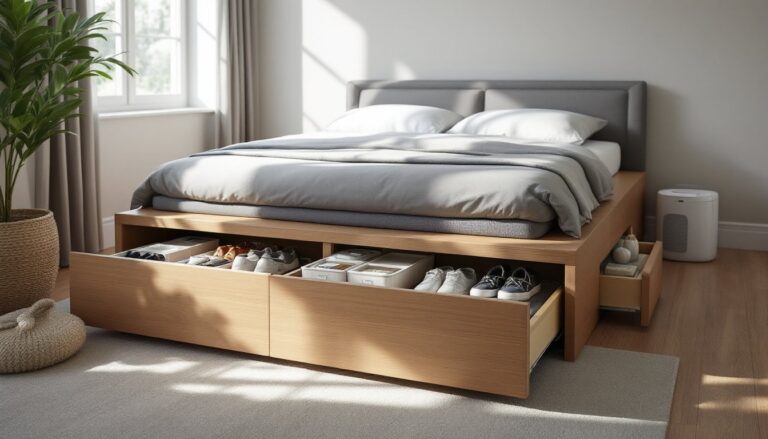
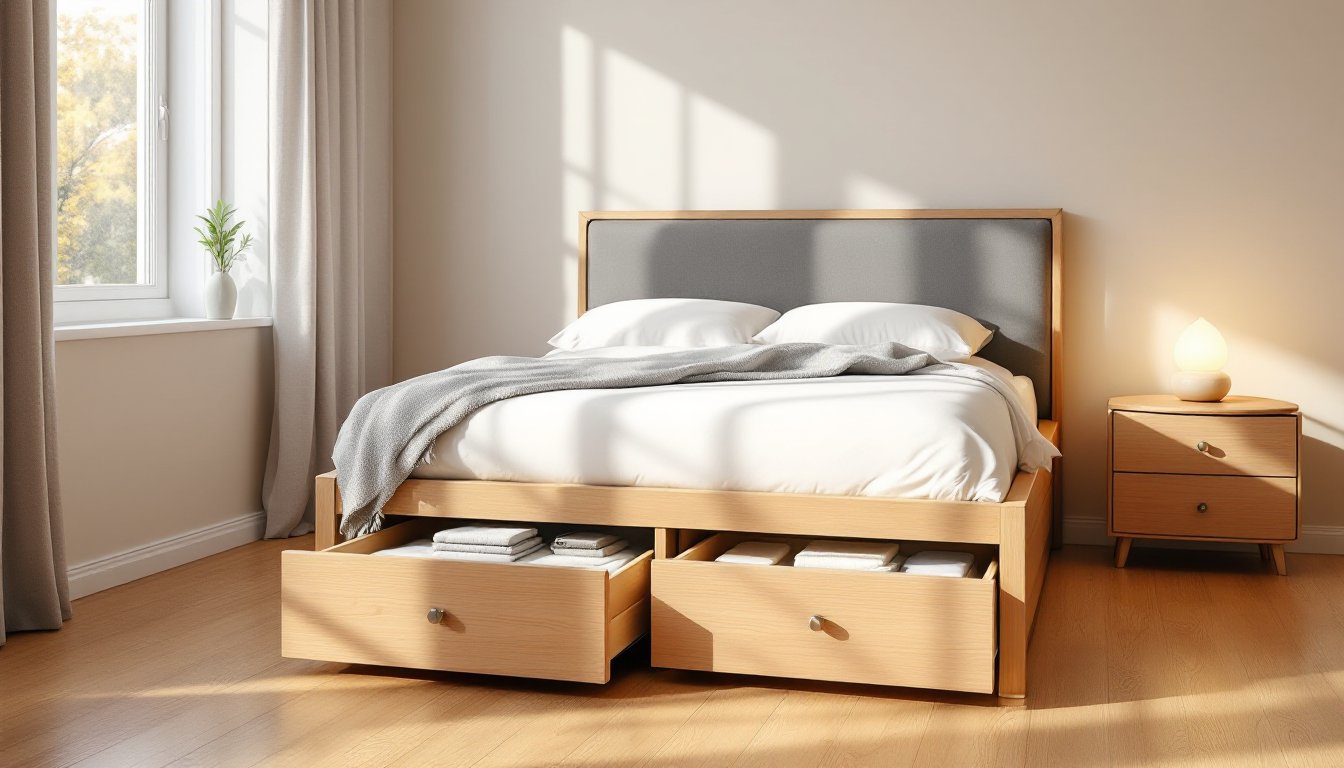
Drawer storage beds feature two to six drawers built into the bed’s base, typically accessed from the sides or footboard. Most designs use side-mounted drawers that pull out perpendicular to the bed frame. A queen-size drawer bed usually has four drawers (two per side), each measuring roughly 24–30 inches wide, 16–20 inches deep, and 6–8 inches tall.
Construction Details:
- Drawers ride on Euro-style undermount slides (rated for 75–100 pounds each) or traditional side-mount slides. Undermount slides cost more but provide smooth, quiet operation and better weight distribution.
- The bed frame requires a sturdy base, typically 2×6 or 2×8 lumber for the perimeter frame, with 2×4 cross supports every 16–24 inches to prevent sagging.
- Drawer boxes are usually built from 1/2-inch or 5/8-inch plywood with dado joints and a 1/4-inch plywood bottom. Solid wood fronts give a finished look.
Drawer beds work best in rooms with clearance on at least one side, you’ll need 30–36 inches of space to fully open a drawer. They’re ideal for frequently accessed items like linens, pajamas, or kids’ toys. Many full size storage bed frame models use this drawer configuration for versatility.
Lift-Up Hydraulic Storage Beds
Lift-up beds (also called ottoman beds or gas-lift beds) use gas struts or hydraulic pistons to raise the entire mattress platform, revealing a large, open storage compartment underneath. The storage area spans the full footprint of the mattress, roughly 60×80 inches for a queen, and can be 8–12 inches deep, depending on frame height.
Construction Details:
- Gas struts are rated by force (measured in Newtons). A queen-size bed typically requires two 100N–150N struts to lift a mattress and platform weighing 80–120 pounds. Oversized or pillow-top mattresses may need 200N struts.
- The platform hinges at the head or foot of the bed. Use continuous (piano) hinges for the full width of the bed, not just two or three butt hinges, which can fail under repeated stress.
- The storage compartment should be lined with 1/2-inch or 3/4-inch plywood to create a smooth, splinter-free surface. Add dividers if organizing smaller items.
Lift-up beds are perfect for bulky, infrequently accessed items: extra bedding, seasonal clothes, luggage, or sports equipment. They work well in tight rooms where side clearance is limited, but you’ll need headroom to lift the mattress, plan for at least 36 inches of clearance above the bed. Accessing storage requires removing pillows and temporarily displacing the mattress, so it’s not ideal for daily-use items.
How to Choose the Right Wooden Storage Bed for Your Space
Choosing a storage bed isn’t just about picking a style, it’s about matching the design to the room’s dimensions, the user’s habits, and the types of items being stored.
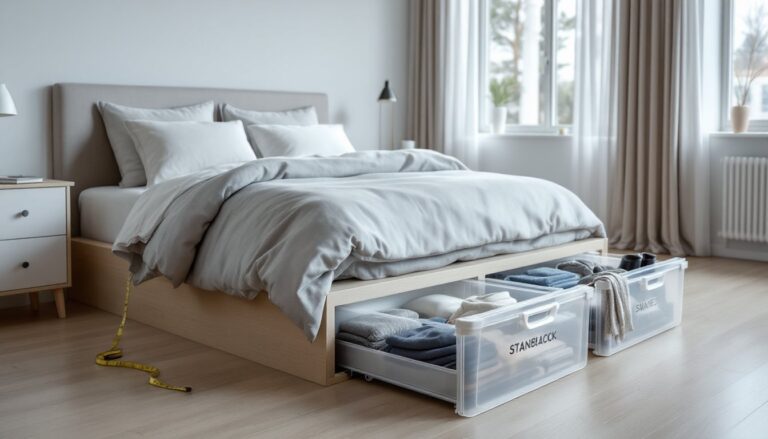
Start with room measurements. Measure the bedroom’s length, width, and any obstructions (radiators, outlets, door swings). A queen-size bed is 60×80 inches: add 30 inches on each side if you’re planning drawer storage, or 24 inches minimum if you’re going with a lift-up design. Check ceiling height, especially in attics or basements, lifting a mattress requires enough clearance to pivot the platform upward.
Match storage type to contents. Drawer beds suit frequently accessed items and work well for children’s rooms or guest rooms that double as linen storage. Lift-up beds handle bulkier loads and are better for seasonal storage or rooms where floor space is tight. If you’re storing heavy items (books, tools, archived files), confirm the bed’s weight rating. Most wooden storage beds support 600–800 pounds total, but cheaper particleboard models may sag under sustained heavy loads.
Consider material quality. Solid hardwoods (oak, maple, cherry) offer the best longevity and can be refinished if scratched or dinged. They’re heavier, which adds stability but makes assembly harder. Softwoods like pine are lighter and easier to work with but dent more easily. For builders following plans from Ana White, pine is a common choice for beginner-friendly projects. Engineered woods (plywood, MDF) keep costs down but require edge banding and veneer for a finished look.
Check hardware and joinery. Quality storage beds use pocket screws, dowels, or mortise-and-tenon joints for the frame, not just butt joints held together with corner brackets. Drawer slides should be rated for at least 75 pounds per drawer. Gas struts for lift-up beds should come from reputable manufacturers (Stabilus, Suspa) and include a damping feature to prevent the platform from slamming down.
Think about mattress height. Storage beds raise the sleeping surface higher than standard frames, typically 18–24 inches from the floor to the top of the mattress. That’s comfortable for most adults but may be too high for young children. If you’re adding a thick mattress (12+ inches) to a high storage frame, consider a step stool.
DIY vs. Store-Bought: Building Your Own Wooden Storage Bed
Building a wooden storage bed is an intermediate-level project that requires solid carpentry skills, a few key tools, and realistic expectations about time and cost.
Tools and Materials:
- Essential tools: Circular saw or miter saw, drill/driver, pocket hole jig (Kreg K5 or similar), tape measure, square, clamps, and sandpaper or random-orbit sander.
- Optional but helpful: Table saw for ripping plywood, biscuit joiner for panel alignment, router for edge profiling.
- Materials for a queen-size drawer bed: Approximately 4–5 sheets of 3/4-inch plywood for the frame and drawer boxes, 2–3 sheets of 1/2-inch plywood for drawer bottoms, 1×4 or 1×6 solid wood for drawer fronts and trim, four sets of undermount drawer slides, wood glue, 1-1/4-inch and 2-1/2-inch pocket screws, and finish (stain or paint).
Estimated Costs:
- DIY drawer bed (queen): $250–$450 in materials, depending on wood grade and hardware quality.
- DIY lift-up bed (queen): $300–$500, with gas struts and piano hinge adding $50–$80.
- Store-bought equivalent: $600–$1,200 for solid wood, $300–$600 for engineered wood or particleboard.
Time Commitment:
- A drawer bed typically takes 16–24 hours spread over a long weekend: cutting parts (4–6 hours), assembly (6–8 hours), drawer construction (4–6 hours), finishing (2–4 hours plus drying time).
- A lift-up bed is slightly faster, 12–16 hours, because there’s no drawer construction, but fitting and adjusting gas struts can be finicky.
Where to Find Plans:
Free and paid plans are available from several reputable sources. Builders looking for detailed tutorials often turn to Fix This Build That for step-by-step woodworking guides, while Instructables offers community-tested designs with user feedback and modifications. Always review plans for complete cut lists, hardware specs, and finish requirements before buying materials.
When to Buy Instead:
If you don’t own a circular saw, drill, and pocket hole jig, you’ll need to invest $150–$300 in tools, which narrows the cost advantage. If you’re short on workspace (garage, basement, or driveway), cutting and assembling plywood sheets becomes difficult. And if you need the bed assembled quickly, say, for a guest arriving in a week, store-bought is the safer bet.
Safety Note: Wear safety glasses when cutting and sanding, and use a dust mask when working with MDF or sanding hardwoods. If you’re finishing with oil-based stain or polyurethane, work in a well-ventilated area and dispose of rags properly (oil-soaked rags can spontaneously combust if left bunched up).
Styling and Maximizing Your Wooden Storage Bed
A well-chosen wooden storage bed becomes the functional and visual anchor of a bedroom. Styling it right makes the room feel cohesive, not cluttered.
Finish and Color:
Natural wood finishes (clear polyurethane, Danish oil, or tung oil) highlight grain and work well in Scandinavian, farmhouse, or mid-century modern rooms. Dark stains (walnut, espresso) add weight and drama, ideal for traditional or masculine spaces. Painted finishes (white, gray, navy) suit coastal or cottage styles and help smaller rooms feel airier. If building or refinishing, apply at least two coats of water-based polyurethane for durability, storage beds take more wear than decorative furniture.
Bedding and Headboards:
Storage beds typically lack built-in headboards, so plan to add one for visual balance. A wall-mounted headboard (upholstered panels, reclaimed wood planks, or even a large piece of artwork) avoids blocking drawer access. Keep bedding simple, storage beds are busy below the mattress line, so overly ornate duvet covers or bed skirts compete visually. Skip the bed skirt entirely: it hides the craftsmanship and collects dust.
Organizing Drawers and Compartments:
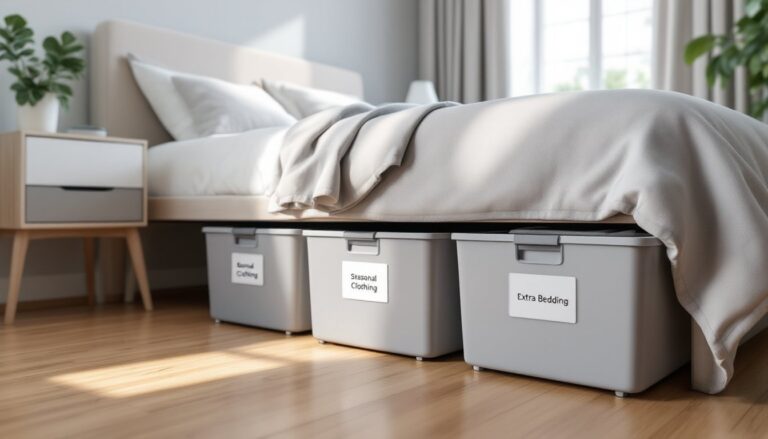
Use drawer dividers or fabric bins inside drawers to keep smaller items (socks, accessories, charging cables) from becoming a jumbled mess. Label drawers if multiple people share the bed or if you’re storing seasonal items that rotate. In lift-up beds, use clear plastic bins or vacuum-seal bags for long-term storage, it keeps contents visible and protected from dust.
Pairing with Other Furniture:
Because a storage bed replaces a dresser or chest, you can often eliminate a piece of furniture and open up floor space. Pair the bed with a streamlined nightstand, floating shelves or wall-mounted units work well, and keep the color palette consistent. If the bed is a rich walnut, echo that tone in the nightstand or a bench at the foot of the bed.
Maintenance:
Wood storage beds need occasional care. Tighten screws and hardware every 6–12 months, especially on drawer slides and gas struts, which loosen with use. Wipe down surfaces with a damp (not wet) cloth and reapply finish if the wood starts to look dull or dry. Drawer slides benefit from a light spray of silicone lubricant once a year to keep them gliding smoothly.