A dull blade is dangerous. So is a loose one rolling around in a drawer or perched on the edge of a cutting board. Proper knife storage isn’t just about aesthetics, it protects edges, prevents accidents, and keeps prep work efficient. Whether working with a chef’s knife collection or a basic three-piece set, the right storage system keeps blades sharp, accessible, and out of harm’s way. From classic blocks to magnetic strips and hidden drawer solutions, today’s storage options balance function, safety, and kitchen real estate better than ever.
Table of Contents
ToggleKey Takeaways
- Proper kitchen knife storage protects blade edges, prevents accidents, and extends knife lifespan by keeping blades sharp and accessible.
- Knife blocks offer classic countertop storage with vertical or horizontal slots, though they require regular cleaning and take up 6–10 inches of counter space.
- Magnetic knife strips are the most space-efficient option, holding 6–8 knives on an 18-inch strip while providing instant visual access and preventing moisture buildup.
- In-drawer organizers with slotted trays or spring-loaded docks keep knives hidden and safe from children, but require fully dry blades and humidity control to prevent rust.
- Kitchen layout, knife collection size, and household safety needs should guide your choice between blocks, magnetic strips, drawer organizers, or DIY solutions.
- Budget-conscious solutions like wall-mounted magnetic strips inside cabinet doors or wooden drawer inserts offer effective kitchen knife storage customization at lower costs.
Why Proper Knife Storage Matters
Tossing knives into a drawer with spatulas and whisks dulls edges fast. Every time a blade knocks against metal or ceramic, microscopic chips form along the cutting edge. Over time, that translates to more frequent sharpening, or worse, a knife that crushes tomatoes instead of slicing them.
Safety is the other half of the equation. The National Safety Council reports that kitchen knife injuries account for thousands of emergency room visits annually, many from improper storage. A knife stored loose can shift when a drawer opens, leading to cuts when reaching inside. Kids and guests don’t always know where blades are hiding, either.
Beyond safety and sharpness, smart storage systems reduce clutter. Countertop real estate is precious in most kitchens, especially in urban apartments or homes with limited cabinetry. The right solution keeps knives visible and ready without monopolizing workspace.
Proper storage also extends blade lifespan. High-carbon steel and Damascus knives, in particular, need dry, ventilated environments to prevent corrosion. Humid drawers or enclosed blocks with poor airflow can lead to rust spots, even on stainless steel.
Knife Blocks: Classic Storage for Everyday Use
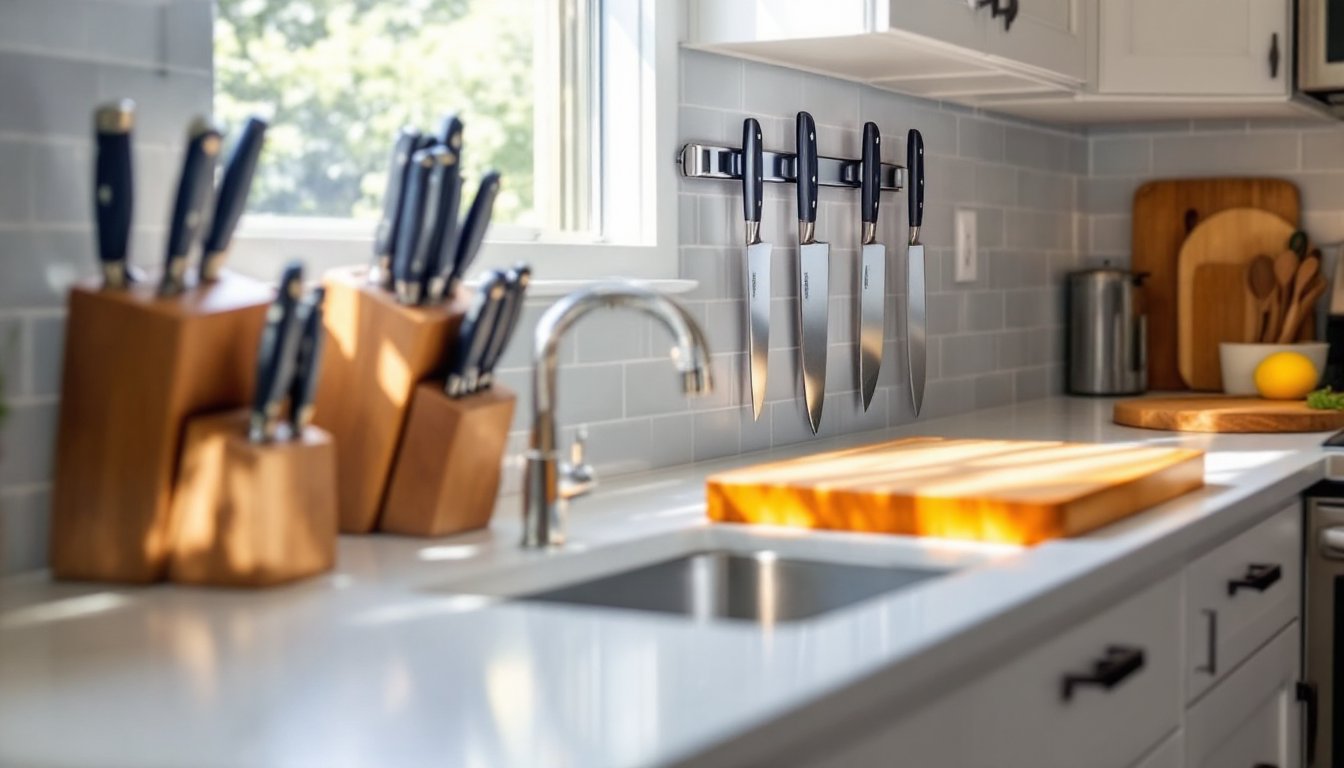
Countertop knife blocks remain the go-to for home cooks who want knives within arm’s reach. Traditional blocks feature angled slots that cradle each blade, protecting edges and keeping handles upright. Most accommodate 8–15 knives, plus kitchen shears and a honing steel.
Look for blocks made from hardwood (maple, walnut, or bamboo) rather than softwoods that splinter or hold moisture. Bamboo is antimicrobial and sustainable, though it can dull faster under heavy use. Walnut and maple are denser and last decades with basic care.
Horizontal vs. vertical slots matter for blade health. Vertical slots (where the blade slides straight down) can nick edges if the fit is tight. Horizontal blocks position knives on their sides, reducing edge contact. Some newer designs use flexible rods or bristles instead of fixed slots, these work with any blade width and don’t force contact with the edge.
Downsides: Knife blocks eat up 6–10 inches of counter space, and slots can trap moisture or food particles. Wash and dry blades thoroughly before storing, and flip blocks upside down every few months to shake out crumbs. If slots feel grimy, use a bottle brush or compressed air to clean them.
Blocks also hide what’s inside. Reaching for a paring knife in dim light can mean fumbling through slots, and mismatched sets leave empty slots that collect dust. For those who value visibility and flexibility, other options may fit better.
Magnetic Knife Strips: Space-Saving Wall Storage
Magnetic strips mount to walls or the side of cabinets, suspending knives by their blades. They’re the most space-efficient option, an 18-inch strip holds 6–8 knives and frees up counter and drawer space entirely. Chefs and serious home cooks favor them for instant visual access and airflow that prevents moisture buildup.
Installation requires a stud or solid backing. Most strips come with screws and mounting hardware rated for 10–15 pounds, enough for a full knife set. Drywall anchors work in a pinch, but won’t support heavier cleavers or a crowded strip. Mount strips 12–18 inches above counter height, high enough to keep knives away from kids, low enough for comfortable access.
Magnet strength varies by brand. Cheap strips use weak magnets that let blades slide or drop, which defeats the safety purpose. Quality options from brands recommended by culinary experts feature neodymium or rare-earth magnets with a pull force of 20+ pounds. Test before loading: a strip that can’t hold a chef’s knife securely isn’t worth installing.
Some worry that magnetic storage damages blades. The myth persists, but magnets don’t affect tempered steel or blade sharpness. The risk comes from improper technique, slapping a knife onto the strip edge-first can chip the blade. Instead, lay the spine (dull back edge) against the magnet first, then let the cutting edge make contact gently.
Magnetic strips aren’t ideal for ceramic knives (they won’t stick) or kitchens with young children who can reach the wall. They also expose blades to dust and grease, so a quick wipe-down before use is smart. But for compact kitchen layouts, they’re hard to beat.
In-Drawer Knife Organizers: Hidden and Protected
Drawer organizers keep knives out of sight and out of reach, making them the safest choice for households with kids. These systems use individual slots or trays that fit inside standard kitchen drawers, with each blade separated by dividers or sheaths.
Two main types dominate the market: slotted trays (bamboo or plastic inserts with angled slots) and knife docks (spring-loaded sheaths that lock blades in place). Slotted trays work like horizontal knife blocks but sit flat in a drawer. They’re inexpensive ($15–$40) and fit most drawer widths, though shallow drawers (under 3 inches deep) won’t accommodate chef’s knives with tall blades.
Knife docks are pricier ($50–$100) but offer better protection. Each blade slides into a spring-loaded slot that grips the spine, preventing movement when the drawer opens or closes. This eliminates the jostling that dulls edges in loose trays. Docks also work in deeper drawers and can be rearranged as knife collections change.
Measure your drawer before buying. Most organizers are 12–18 inches long and 4–6 inches wide. Deep drawers (5+ inches) accommodate larger knives and leave room for other tools. Shallow drawers may require low-profile organizers or custom solutions.
One downside: drawers trap humidity, especially in kitchens near dishwashers or sinks. Store knives only when fully dry, and consider adding a silica gel packet to absorb moisture. Wood trays can warp or mold in damp environments, so plastic or coated organizers are better for high-humidity climates.
Drawer storage also means opening and closing repeatedly, which can shift organizers over time. Non-slip drawer liners or adhesive pads keep trays in place and reduce noise.
Creative DIY Knife Storage Ideas
Budget-conscious DIYers can build effective knife storage with basic tools and materials. A magnetic knife strip can be mounted inside a cabinet door, keeping blades hidden but accessible. Use the same neodymium strips sold for walls, and attach them with heavy-duty adhesive or screws. Ensure the door closes without blades hitting the cabinet frame, measure twice, mount once.
Another option: repurpose a wooden utensil caddy as a countertop knife holder. Fill a wide-mouth jar or crock with bamboo skewers, dried beans, or plastic straws cut to uniform length. The dense fill holds knife blades upright without slots. This method works for any blade width and adds a rustic look, though it takes up more counter space than a block.
Wall-mounted pegboard offers modular storage for knives, utensils, and cutting boards. Hang knives using pegboard hooks with rubber coating to protect handles, or add small shelves and lean blades against the wall. Pegboard systems adapt as kitchen needs change, and they’re easy to relocate without patching screw holes.
For a cleaner aesthetic, build a knife drawer insert from scrap hardwood. Cut pieces to fit drawer dimensions, then rout or saw angled slots for each blade. Sand edges smooth and finish with food-safe mineral oil. This approach lets cooks customize slot widths for specific knives, and it costs a fraction of commercial organizers.
Safety note: DIY solutions must secure blades firmly. Loose or unstable storage is more dangerous than no storage at all. Test any homemade system with weighted objects before adding sharp knives, and involve kids in a safety walkthrough so they know where blades live.
Choosing the Right Storage for Your Kitchen Layout
Kitchen size and workflow should drive storage decisions. Compact kitchens (under 100 square feet) benefit from wall-mounted magnetic strips or in-drawer organizers that don’t claim counter space. Larger kitchens with islands or expansive counters can handle blocks without crowding prep areas.
Consider knife collection size and type. A minimalist with three knives (chef’s, paring, bread) needs a simple solution, a small block, a short magnetic strip, or a drawer tray. Collectors with 10+ knives, including specialty blades like boning knives or cleavers, need modular systems that expand. Magnetic strips and pegboards scale easily: blocks require replacing the entire unit.
User height and mobility matter, too. Wall-mounted storage works well for able-bodied adults but may not suit households with accessibility needs. Drawer organizers keep knives at a lower, more reachable height, and blocks offer stable, predictable placement for those with limited grip strength.
Budget ranges from $10 for basic drawer trays to $200+ for premium magnetic strips or custom blocks. Mid-range options ($40–$80) deliver solid performance without luxury finishes. Prioritize functionality over aesthetics, a sturdy bamboo block beats a wobbly designer piece every time.
Finally, think about future needs. New cooks might start with a small block and upgrade to a magnetic strip as their collection grows. Renters should choose non-permanent solutions like countertop blocks or adhesive-mounted strips that won’t damage walls. Homeowners planning a kitchen remodel can factor built-in knife storage into cabinetry designs, some modern cabinets include integrated magnetic strips or pull-out knife drawers.
Conclusion
Knife storage isn’t one-size-fits-all. The best system matches kitchen layout, knife collection, household safety needs, and personal workflow. Blocks offer familiar countertop access. Magnetic strips maximize space and visibility. Drawer organizers hide blades safely. DIY solutions fill gaps on any budget. Whichever path fits, the goal remains the same: sharp edges, safe handling, and a kitchen that works as hard as the cook.