A cluttered garage isn’t just an eyesore, it’s a productivity killer. When hand tools go missing, power cords tangle into knots, and workbench space disappears under piles of miscellaneous hardware, even simple projects turn into frustrating scavenger hunts. The solution isn’t more floor space: it’s smarter use of the space already there. Effective garage tool storage transforms walls, ceilings, and corners into functional zones that keep equipment visible, protected, and ready to use. Whether outfitting a weekend workshop or a daily work zone, the right storage system pays dividends in saved time, extended tool life, and safer working conditions.
Table of Contents
ToggleKey Takeaways
- Effective garage tool storage extends tool life and improves safety by keeping equipment clean, organized, and away from floor hazards—with proper storage preventing rust, damage, and injury-causing tripping hazards.
- Wall-mounted systems like French cleats, slatwall, and pegboard maximize vertical space without consuming floor area, offering flexibility to reorganize tools as your collection evolves.
- DIY budget-friendly solutions using PVC pipes, pallet wood, magnetic strips, and scrap lumber deliver functional garage tool storage for under $50, making professional-level organization accessible to any homeowner.
- Prioritize organizing frequently-used hand tools at eye level (48-60 inches), weekly items at mid-height, and seasonal equipment overhead or in cabinets to create efficient work zones that minimize reaching and bending.
- Always anchor storage systems directly to wall studs or ceiling joists using proper fasteners—never drywall alone—to safely handle loads up to 300-600 pounds and prevent catastrophic failure.
Why Proper Tool Storage Matters for Your Garage
Tools scattered on benches or piled in corners take real abuse. Exposed blades gather rust, calibrated instruments get knocked out of adjustment, and precision edges dull from contact with concrete. A drop from waist height can crack a plastic housing or throw a level’s vial out of true.
Organized storage extends tool life by keeping equipment clean, dry, and separated. Hanging saws and planes prevents edge contact. Closed cabinets shield electronics from temperature swings and humidity. Drawer dividers stop wrenches from battering each other during drawer slides.
Safety improves when sharp and powered tools have designated homes. Tripping hazards disappear when cords and extension leads hang on hooks instead of snaking across the floor. OSHA notes that improper tool storage contributes to workplace injuries, standards that apply just as much in home workshops.
Efficiency matters, too. The average DIYer wastes 15-20 minutes per project hunting for misplaced tools. Over a year of weekend projects, that’s hours lost to disorganization. When every screwdriver, clamp, and drill bit has a visible, consistent location, setup and teardown shrink to minutes.
Wall-Mounted Storage Systems That Maximize Space
Walls offer the largest untapped storage real estate in most garages. Mounting systems free up floor space while keeping tools at arm’s reach. The key is anchoring into wall studs, standard 16-inch on-center framing in most residential construction, or using the right anchors for drywall and masonry.
French cleat systems provide maximum flexibility for evolving tool collections. A 1×4 or ¾-inch plywood strip ripped at a 45-degree bevel mounts horizontally to studs, with matching cleats attached to tool holders, shelves, and bins. Components slide on and off without tools, making reorganization painless. Load capacity depends on cleat length and stud connection, expect 50-75 pounds per linear foot when properly installed.
Slatwall panels offer similar modularity with factory-made accessories. Hooks, baskets, and brackets snap into horizontal grooves. Panel quality varies widely: look for ¾-inch MDF or PVC cores rather than thin particleboard. Mount panels directly to studs or over ¼-inch plywood backing for maximum hold.
Track systems with sliding hooks work well for frequently rearranged tools. Aluminum or steel tracks mount horizontally, accepting hooks that slide and lock anywhere along the channel. These excel for seasonal tool swaps, gardening equipment in summer, snow removal gear in winter.
Many homeowners find inspiration from compact garage solutions that make efficient use of vertical wall space in tight quarters.
Pegboard Solutions for Flexible Organization
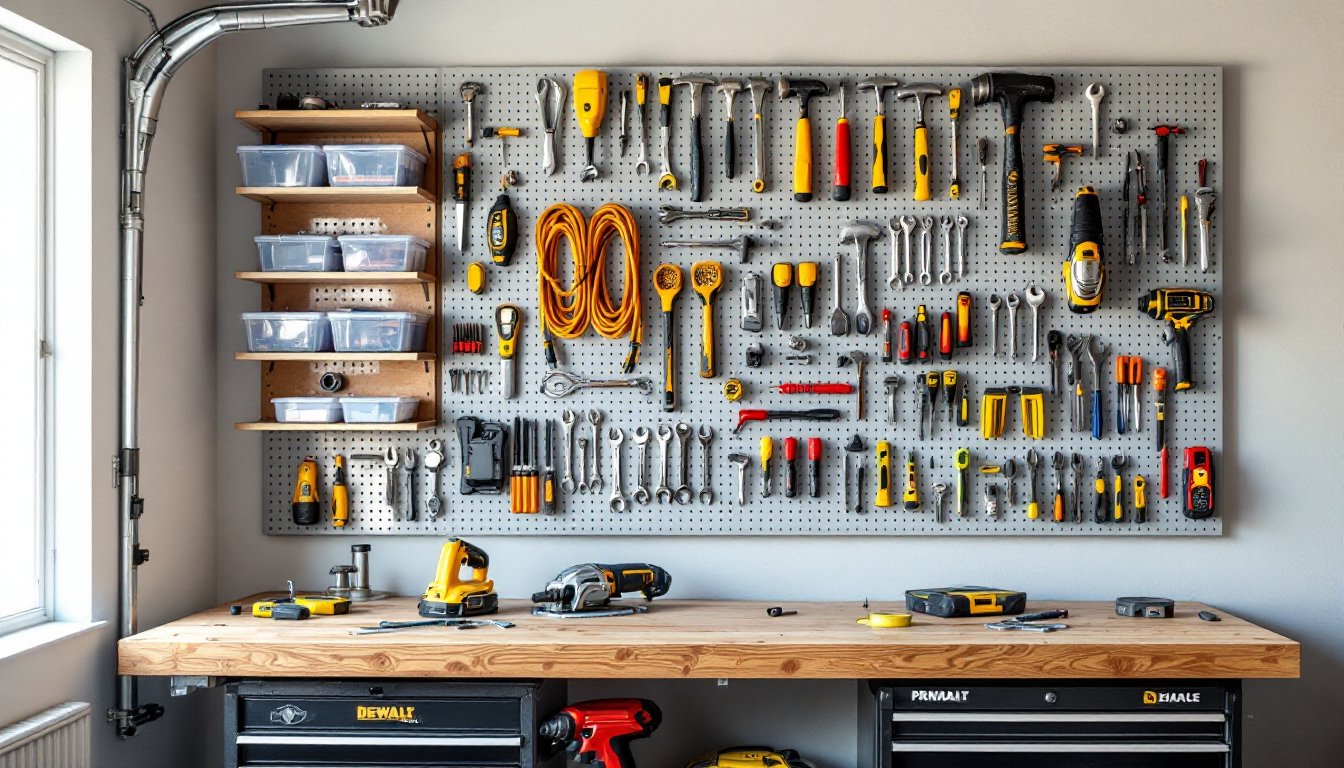
Pegboard remains the most affordable and customizable wall storage option. Standard ¼-inch tempered hardboard with 1-inch hole spacing accepts a vast ecosystem of hooks, shelves, and tool holders. The catch: pegboard needs an air gap behind it for hook insertion.
Mount pegboard over 1×2 furring strips attached to studs, creating a ¾-inch standoff. This spacing allows hooks to seat properly while maintaining structural support. For heavier loads, upgrade to ½-inch steel pegboard, which handles impact tools and bulky equipment without sagging.
Pegboard accessories have evolved beyond basic J-hooks. Spring-loaded tool clips grip handles securely. Angled shelves hold spray cans and bottles. Magnetic trays catch hardware. Bin systems corral small fasteners and drill bits. The flexibility to rearrange hooks in minutes keeps storage aligned with changing tool inventories.
Tool Cabinets and Workbenches for Ground-Level Storage
Vertical storage handles hanging tools, but benchtop equipment, power tools, and bulk materials need ground-level solutions. Tool chests and cabinets protect expensive equipment from dust and theft while organizing gear by category.
Rolling tool chests combine mobility with security. Quality units feature ball-bearing drawer slides rated for 100+ pounds, keyed locks, and powder-coat finishes that resist shop chemicals. Drawer organization matters, shallow top drawers (2-3 inches) for hand tools, mid-depth drawers (4-6 inches) for power tool accessories, and deep bottom drawers (8-12 inches) for bulky gear.
For fixed installations, wall-mounted cabinets maximize floor space. Metal cabinets from industrial suppliers typically outlast big-box particleboard options. Look for 20-gauge steel construction and adjustable shelves. Wall studs must carry the load, a filled 36-inch cabinet can weigh 200+ pounds.
Workbenches with integrated storage serve double duty. A sturdy bench needs a 1½ to 2-inch thick hardwood or plywood top to absorb hammer blows and clamp pressure. Cabinets or drawers underneath keep frequently used tools within reach. Standard bench height runs 36-38 inches, but taller workers often prefer 40-42 inches to reduce back strain during detail work.
Many professional workshop setups incorporate modular workbench systems that grow with tool collections. If building custom benches, use 2×4 or 4×4 legs and cross-bracing, a wobbly bench is dangerous when operating power tools.
Overhead and Ceiling Storage Options
Garage ceilings typically sit 8-10 feet high, offering significant storage potential for seasonal items and less-frequently-used equipment. The challenge is weight distribution and safe access.
Overhead rack systems mount to ceiling joists, usually 16 or 24 inches on-center, using lag bolts. Quality racks use 14-gauge or heavier steel and carry 300-600 pounds when properly installed. Mount racks at least 4 feet above vehicle roofs to maintain clearance. These work well for carrying cases, compressors, and bulk material storage.
Pulley lift systems bring heavy items like kayaks, ladders, and bicycles to ceiling height without ladders. Mechanical advantage makes 100-pound loads manageable for one person. Install eyebolts into ceiling joists, never drywall alone, using ½-inch lag bolts for secure anchoring.
Ceiling-mounted shelving over garage doors or in corners captures dead space. Use ¾-inch plywood shelves supported by 2×4 brackets lagged into joists. Limit span to 48 inches between supports to prevent sagging. Paint or seal plywood to resist moisture.
Before installing overhead storage, verify ceiling structure. Trusses in newer homes often carry warnings against adding weight to bottom chords. When in doubt, consult a structural engineer, ceiling collapse poses serious injury risk.
DIY Tool Storage Ideas on a Budget
Effective storage doesn’t require expensive commercial systems. Scrap lumber, repurposed materials, and basic hardware create functional solutions for tight budgets.
PVC pipe holders organize long-handled tools. Cut 4-6 inch sections of 3 or 4-inch diameter PVC at 45-degree angles, mount cut-side-up to a wall board, and slide in rake, shovel, and broom handles. Total cost: under $20 for a dozen holders.
Pallet wood racks turn free shipping pallets into rustic storage. Disassemble pallets carefully (watch for nails), select straight 2×4 and 1×4 sections, and reassemble into shelving units or French cleat holders. Sand rough edges and apply a coat of exterior stain for durability.
Magnetic strips salvaged from old knives blocks or purchased in 18-24 inch lengths hold drill bits, screwdriver bits, and small metal tools. Mount to studs with construction adhesive and screws. Small rare-earth magnets from craft stores create custom tool holders for pliers and wrenches.
Coffee cans and jars organize hardware when mounted under shelves. Drill through the center of metal lids, bolt lids to shelf undersides, and screw jars onto lids. Contents stay visible and accessible. Mason jars work especially well for this application.
Woodworking enthusiasts can find detailed DIY storage projects with cut lists and assembly instructions. Many projects use common 2×4 and ¾-inch plywood stock available at any home center.
Lumber rack from 2×4s handles sheet goods and long stock. Build a simple cantilever design: vertical 2×4 posts lagged to studs, with 2×4 arms angled slightly upward extending 12-18 inches. Space arms 12 inches vertically. Total material cost under $40.
Choosing the Right Storage System for Your Needs
No single storage solution fits every garage or workflow. The right system depends on tool inventory, available space, budget, and how frequently the workshop sees use.
Start with an inventory assessment. List all tools by category: hand tools, power tools, fasteners, finishing supplies, seasonal equipment. Measure large items, table saws, air compressors, welders, to determine floor space requirements. This inventory reveals whether wall-mounted systems, cabinets, or overhead storage should dominate.
Consider access frequency. Daily-use tools belong at eye level, 48-60 inches off the floor. Weekly-use items can go higher or lower. Monthly or seasonal gear belongs overhead or in cabinets. This creates efficient work zones that minimize reaching and bending.
Space constraints dictate system type. Garages with vehicles have limited floor space, making wall and ceiling storage essential. Dedicated workshops can accommodate freestanding cabinets and workbenches. Measure wall lengths, ceiling heights, and door swing clearances before purchasing systems.
Budget allocation should prioritize quality over quantity. Better to install one robust wall system correctly than fill walls with flimsy hardware that fails under load. Industrial-grade components cost more upfront but outlast residential-grade alternatives by years.
For those working with minimal square footage, strategies from warehouse storage optimization translate surprisingly well to garage workshops, particularly vertical space utilization and zone-based organization.
Growth planning matters for active DIYers. Modular systems that accept new components, French cleats, slatwall, track systems, accommodate expanding tool collections without teardown and reinstallation. Fixed pegboard or custom shelving may need replacement as needs evolve.
Safety can’t be an afterthought. Ensure proper anchoring into structural members, not just drywall. Overloading shelves or racks causes failures that damage tools and cause injury. When mounting heavy cabinets or overhead racks, getting help isn’t optional, two people ensure level installation and prevent dropped loads. Organizing garage tools using methods similar to professional garage storage techniques keeps work areas safer and more productive.