Most homeowners don’t realize that the space beneath their bed represents prime real estate, 12 to 18 cubic feet of wasted potential sitting idle. Under bed storage is one of the simplest, most effective ways to reclaim bedroom square footage without major construction or expense. Whether you’re managing a small apartment, dealing with seasonal items, or simply trying to reduce bedroom clutter, the right storage solution can transform that dead zone into an organized asset. This guide walks you through practical options, installation tips, and strategies to keep everything accessible and in good condition.
Table of Contents
ToggleKey Takeaways
- Under bed storage reclaims 12 to 18 cubic feet of wasted bedroom space at a fraction of the cost of new furniture, with quality containers ranging from $15–$50 compared to $300+ for dressers.
- Choose flat plastic bins for low-clearance beds, rolling drawers for accessibility, or bed risers to elevate your frame and create room for deeper under bed storage containers.
- Always measure clearance in three spots (head, foot, center), label bins clearly by contents and season, and pack heavier items toward the front to avoid strain when retrieving storage.
- Protect stored items with airtight, moisture-resistant containers, desiccant packets, cedar blocks, or breathable cotton bags—never rely on sealed plastic alone, as it traps moisture and risks mildew.
- Rotate your under bed storage seasonally, inspect items every few months for moisture damage, and leave 1–2 inches of clearance on all sides for easy access and to prevent bins from becoming permanent dumping grounds.
Why Under Bed Storage Matters for Modern Homes
Bedroom clutter doesn’t just look bad, it affects how you feel in your own space. Under bed storage solves a real problem: most bedrooms lack sufficient closet or dresser space, especially in older homes or apartments. Sliding storage bins, containers, and purpose-built drawers let you tuck away off-season clothing, bedding, shoes, and miscellaneous items without consuming wall space or requiring new furniture.
Beyond aesthetics, accessible storage improves your home’s functionality. Items stored under the bed are easy to rotate seasonally, and dust-proof containers protect fabrics from moisture and pests. The key is choosing the right system for your bed height, floor space, and access needs. A platform bed with a 12-inch clearance demands flat, low-profile bins, while a bed on standard wooden legs might accommodate rolling drawers underneath. Modern families also benefit from the cost efficiency: quality under bed storage containers cost $15–$50, versus $300+ for a new dresser or cabinet.
Popular Under Bed Storage Options and Container Types
Flat Plastic Bins and Rolling Drawers
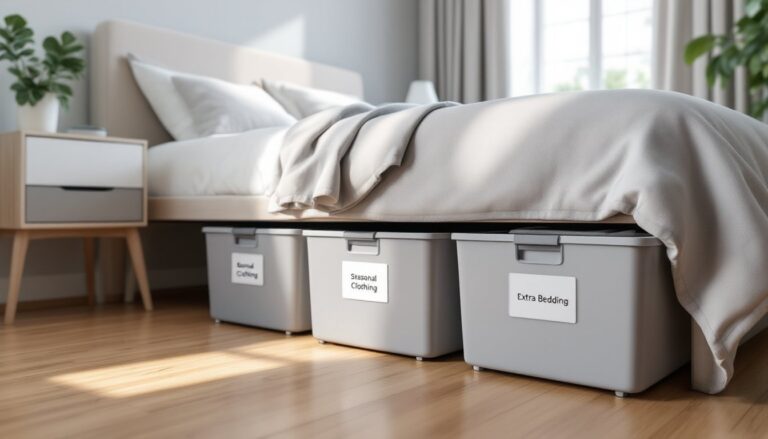
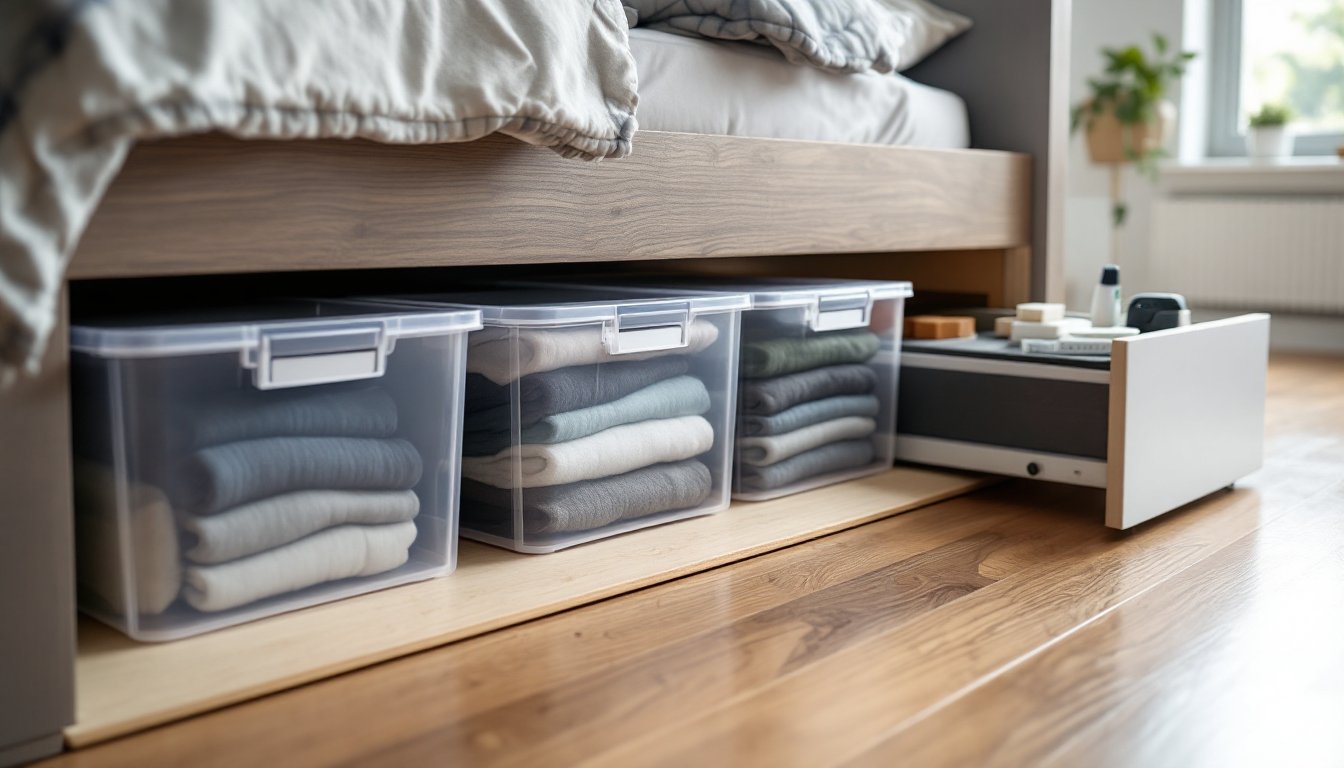
Flat plastic storage bins remain the go-to choice for many DIYers. These shallow, rectangular containers slide easily under low-clearance beds and come in various sizes, common dimensions are 28″ × 18″ × 6″ or 32″ × 20″ × 8″. Look for models with secure, latching lids to keep dust and moisture out. Clear or semi-transparent bins let you see contents without opening them, saving time when hunting for that specific sweater.
Rolling drawers offer a step up: they’re mounted on smooth-gliding casters and pull out like a traditional drawer, eliminating the need to reach back under the bed. This matters if your bed sits low or if mobility is a concern. Brands offer modular rolling systems that stack or sit side by side. The trade-off? Rolling systems cost more ($40–$80 per unit) and require floor space in front of the bed to pull them out fully.
For twin bed with under storage solutions, flat bins are ideal since twin frames sit closer to the ground. Measure your bed’s clearance first, many twin beds have only 8–10 inches of space, so ultra-slim bins become your only option.
Bed Risers and Elevated Bed Frames
If your current bed doesn’t have enough clearance, bed risers are a simple fix. These are plastic, wood, or metal blocks that sit under each bed leg, raising the frame 3–8 inches. Standard risers cost $20–$40 for a set of four. This method instantly creates room for deeper storage containers or even a small dresser underneath.
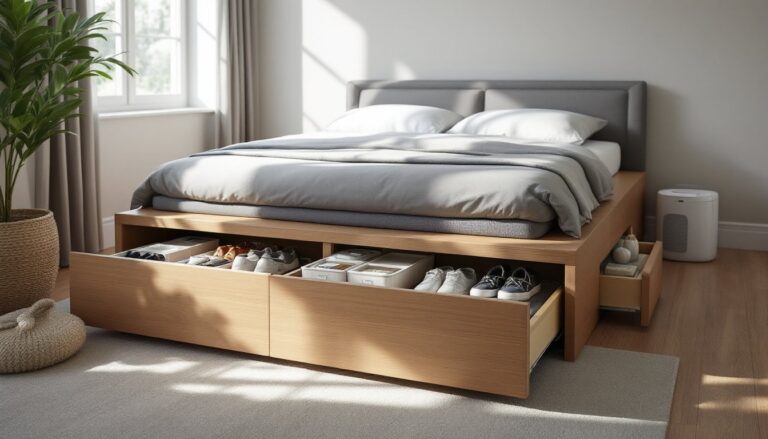
Alternatively, some homeowners replace their bed frame with an elevated platform bed designed with built-in storage. These frames feature deep drawers or shelving integrated into the structure. West Elm storage beds and similar options run $600–$1,500 but combine sleeping, storage, and style. For a long-term solution in a small bedroom, this one-piece approach eliminates shuffle-and-slide headaches.
Risers work best if your floor is level and solid. Check that legs won’t slip off risers during weight shifts. Some people prefer adhesive-backed, non-slip pads under legs for extra grip.
How to Organize and Pack Under Bed Spaces Effectively
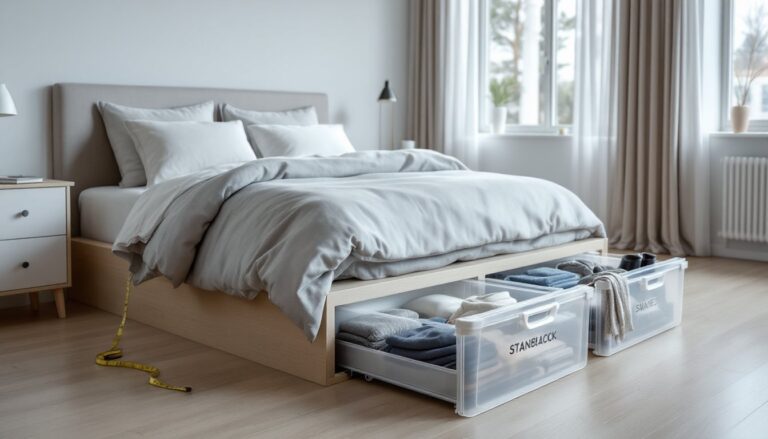
Before buying containers, measure your bed’s clearance in three spots, head, foot, and center, because floors aren’t always perfectly flat. Note the length, width, and height available. Then inventory what you’ll store: off-season clothing, extra linens, shoes, holiday decorations, or sports equipment. Group similar items together: storing all winter coats in one bin and boots in another beats scattering them across multiple containers.
When packing underbed storage containers, use a few principles. First, heavier items go in lower or front-positioned bins so you’re not straining to pull out a heavy load from the back. Second, vacuum-seal bags compress bulky textiles like comforters and heavy sweaters, but always store them in moisture-resistant containers afterward, vacuum bags alone don’t prevent humidity damage. Third, label every bin clearly with contents and, if applicable, the season. A simple label maker beats trying to remember what’s in “Box 7.”
For under bed storage bins, cedar blocks, activated charcoal, or silica gel packets deter pests and absorb moisture. Replace them every six months, especially in damp climates. Never store anything that requires air circulation (like electronics with batteries) in sealed containers, and avoid storing items that off-gas, such as new plastic goods or treated fabrics, directly under where you sleep.
Pro Tips for Keeping Items Accessible and Protected
Accessibility is the difference between storage that works and storage that fails. If containers are jammed so tightly you can’t pull them out without shifting the bed, you won’t use them. Leave at least 1–2 inches of clearance on all sides, and ensure nothing blocks the foot or side of the bed.
Rotate inventory seasonally. Come spring, swap winter coats for summer dresses. This prevents bins from becoming permanent dumping grounds and keeps your active items reachable. Underbed storage containers with wheels or pull handles make this rotation effortless.
Protection is equally crucial. Keep moisture-sensitive items, photo albums, old documents, leather goods, in airtight containers with desiccant packets. For fabrics, use cotton or breathable storage bags rather than plastic alone: plastic traps moisture, risking mildew. Inspect stored items every few months, especially in humid climates. Even a small leak from a roof or plumbing can damage everything underneath if you’re not checking.
One underrated tip: use shelf liners or thin plywood panels under your containers. This protects the flooring and makes sliding bins easier. Hardwood floors in particular can be gouged by dragging heavy storage repeatedly. Some homeowners lay down inexpensive plywood sheets in the under-bed zone as a permanent base.
If your bedroom has temperature swings, unheated in winter, hot in summer, avoid storing anything sensitive to heat or cold (electronics, certain plastics, waxes) in under bed spaces. Day bed storage solutions that are built into the furniture frame offer better climate stability than bins on open floors.
Conclusion
Under bed storage isn’t glamorous, but it’s effective. Whether you choose flat plastic bins, rolling drawers, or a bed frame with integrated storage, the payoff is immediate: reclaimed floor space, organized items, and a cleaner bedroom. Start by measuring your available space, choosing containers that fit your clearance and access needs, then pack smart with labeling, protection, and seasonal rotation in mind. Small bedrooms and homes with limited storage have nothing to lose, and plenty of space to gain.