Packing up a two-bedroom apartment into a storage unit isn’t like playing Tetris, it’s more like solving a puzzle where every piece costs you monthly rent. Get the size wrong, and you’ll either waste money on empty space or end up playing furniture Jenga every time you need something from the back. Most renters and homeowners moving from a 2-bedroom apartment need a 10×15 storage unit (150 square feet), which holds the contents of most standard two-bedroom setups. But that’s not always the whole story. Your actual needs depend on furniture volume, whether you’re storing appliances, and how well you pack.
Table of Contents
ToggleKey Takeaways
- A 10×15 storage unit (150 square feet) is the ideal size for most 2-bedroom apartments, accommodating standard furniture, appliances, and 30-40 boxes.
- What size storage unit you need depends on furniture style, bulky appliances, hobbies, and packing efficiency—not just room count.
- Upgrade to a 10×20 unit if you have large furniture, major appliances, or more than 50 boxes; skip oversizing unless storing vehicles or combining households.
- Disassemble furniture, use uniform boxes, and leverage vertical space with shelving to maximize capacity and avoid paying for empty air.
- Always confirm whether quoted unit dimensions are interior or exterior measurements before signing a lease, as some facilities quote exterior sizes.
- Factor in 20-30% additional space for access aisles if you’ll need regular item retrieval, which effectively reduces your usable storage area.
Understanding Storage Unit Sizes and Measurements
Storage facilities measure units in feet, width × depth, with ceiling heights typically ranging from 8 to 10 feet. A 10×15 unit gives you 150 square feet of floor space, roughly the size of a large bedroom. But don’t confuse floor space with actual capacity.
Most facilities quote dimensions as interior measurements, meaning the space you can actually use. But, some older facilities measure exterior dimensions, which can short you a foot or more on each side. Always ask whether quoted sizes are interior or exterior before signing a lease.
Here’s a quick reference for common unit sizes and their typical capacity:
- 5×5 (25 sq ft): Small closet: stores boxes, seasonal items, or a few small furniture pieces
- 5×10 (50 sq ft): Walk-in closet: fits contents of a studio or dorm room
- 10×10 (100 sq ft): Standard bedroom size: handles a one-bedroom apartment
- 10×15 (150 sq ft): Large bedroom: accommodates most 2-bedroom apartments
- 10×20 (200 sq ft): One-car garage: holds a full 2-bedroom apartment plus extras
- 10×30 (300 sq ft): Oversized: suitable for a 3-bedroom house or large apartment with appliances
Ceiling height matters more than most people realize. Stackable plastic bins, shelving units, and properly packed boxes let you use vertical space efficiently. A 10×15 unit with 10-foot ceilings effectively gives you more storage than the same floor plan with 8-foot ceilings.
The Best Storage Unit Size for a 2 Bedroom Apartment
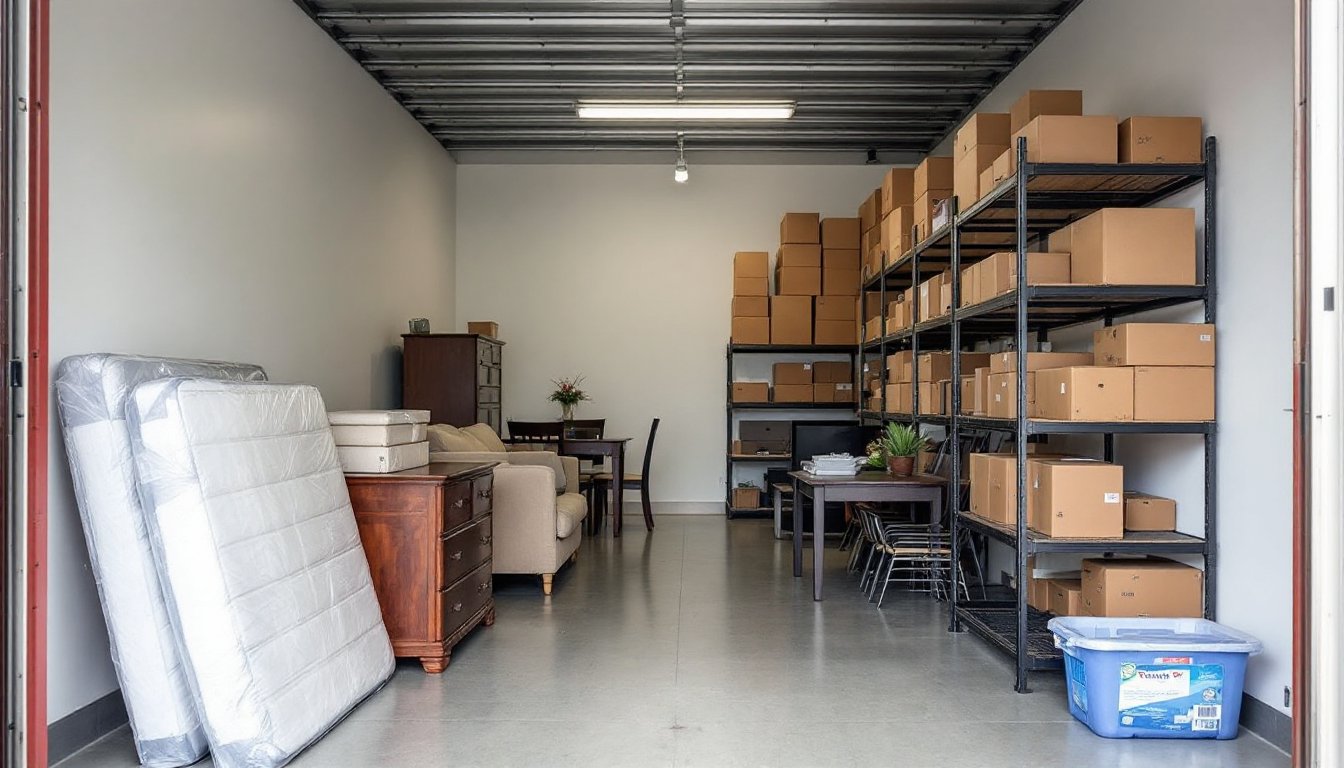
For most 2-bedroom apartments, a 10×15 unit is the sweet spot. It typically accommodates:
- Queen or full-size bed (mattress, box spring, frame)
- Sofa and loveseat or sectional
- Dining table with four chairs
- Coffee table and end tables
- Dresser and nightstands
- 30-40 medium to large boxes
- TV stand and entertainment center
- Small appliances (if needed)
This assumes standard apartment furniture, not heirloom armoires or oversized sectionals. If you’re wondering what size storage unit for 1 bedroom apartment, a 10×10 usually does the job, which gives you a reference point for scaling up.
When a 10×15 Unit Works Best
A 10×15 unit is ideal when you’re storing a minimally furnished or moderately furnished 2-bedroom apartment. Think IKEA basics, standard-issue apartment furniture, and a reasonable number of boxes. This size works well for:
- Short-term storage during a move: You’re between leases, renovating, or staging a home for sale
- Seasonal rotation: Storing off-season furniture, holiday decorations, or sports equipment alongside apartment contents
- Decluttering without purging: You’re not ready to sell or donate but need items out of the way
Pack smart and you can fit a surprising amount. Disassemble bed frames, stack chairs seat-to-seat, and use dresser drawers to hold linens or smaller items. Leave an aisle down the middle if you’ll need to access items regularly, it cuts usable space but saves you from unpacking half the unit every time.
When to Upgrade to a 10×20 or 10×30 Unit
Upsize to a 10×20 unit (200 sq ft) if you have:
- Large or bulky furniture (king-size bed, oversized sectional, armoires)
- Major appliances like a washer, dryer, or full-size refrigerator
- More than 50 boxes of household goods
- Outdoor furniture, grills, or patio sets
- Extra bedroom furniture if one room doubled as an office or guest room with full setups
A 10×30 unit (300 sq ft) is overkill for most 2-bedroom apartments unless you’re also storing a vehicle, workshop equipment, or the contents of a garage. If you’re combining households, inheriting furniture, or running a side business from home, the extra space might justify the cost. Otherwise, you’re paying for air.
Factors That Affect Your Storage Unit Size Needs
Not all 2-bedroom apartments pack the same. Here’s what pushes you toward a larger or smaller unit:
Furniture style and era: Mid-century modern and Scandinavian pieces tend to be compact and stackable. Victorian, farmhouse, and traditional furniture with heavy frames and deep profiles eat up more space. Solid wood furniture is denser and harder to disassemble than particleboard flat-pack items.
Appliances: If you own a washer, dryer, standalone freezer, or large refrigerator, add at least 20-30 square feet to your estimate. Appliances don’t stack well and often need to sit on the floor.
Hobbies and collections: Bikes, skis, musical instruments, craft supplies, book collections, and workshop tools all add volume fast. A decent vinyl collection or home library can fill 10-15 boxes on its own.
Packing efficiency: Poorly packed boxes with air gaps waste space. So do mismatched box sizes that don’t stack cleanly. Use uniform boxes (banker’s boxes or standard moving boxes work well), fill voids with soft goods, and label everything. Some home organization strategies focus on reducing volume before storage, which can save you a unit size.
Access needs: If you’ll visit the unit regularly, you need aisle space. Plan for a 2-3 foot pathway down the center or along one side. This effectively reduces usable storage space by 20-30%, so factor that into your size calculation.
Climate control: Climate-controlled units sometimes have slightly different dimensions than standard units due to insulation and HVAC ducting. If you’re storing electronics, wood furniture, or anything sensitive to humidity and temperature swings, the extra cost is worth it, but confirm the actual interior dimensions.
How to Maximize Space and Lower Storage Costs
Shrinking your storage footprint by even one unit size can save $50-$150/month depending on your market. Here’s how to pack tighter without damaging your stuff:
Disassemble everything possible: Bed frames, table legs, shelving units, if it comes apart, take it apart. Wrap hardware in labeled plastic bags and tape them to the corresponding furniture piece. Store bed rails vertically against a wall.
Use furniture as containers: Dressers, armoires, and filing cabinets can hold linens, clothing, books, or kitchenware. Just don’t overload them to the point they become impossible to move or risk structural damage.
Invest in uniform boxes: Banker’s boxes or standard moving boxes stack cleanly and maximize vertical space. Avoid mixing box sizes, irregular stacks waste space and create collapse risk.
Stack strategically: Heaviest items on the bottom, lightest on top. Place boxes along walls and create stable columns. Use furniture with flat tops (dressers, filing cabinets) as platforms for additional boxes.
Protect without over-padding: Furniture pads and moving blankets are essential, but don’t wrap everything in three layers of bubble wrap. That adds bulk without much benefit. Focus padding on corners, glass, and finished wood surfaces.
Vertical shelving: Bring a freestanding metal shelving unit (the kind you’d use in a garage). It turns a 10×15 unit into a mini warehouse with accessible, organized storage. Adjustable shelves let you customize spacing for different items.
Create zones: Group similar items together, kitchen boxes in one area, bedroom furniture in another. This speeds up retrieval and prevents you from tearing apart the entire unit to find one box. If you’re also considering space-saving furniture for your new place, organizing by room makes unpacking easier.
Photograph your layout: Take photos of your packed unit from multiple angles. When you return months later, you’ll remember where everything is and won’t need to dig blindly. Many small space living strategies emphasize visual systems, which work just as well in storage.
Avoid these space-wasters: Don’t store items in garbage bags (they’re irregular, tear easily, and don’t stack). Don’t leave large voids or airways between furniture. And don’t store anything you should’ve donated, every item costs you money monthly.
Conclusion
A 10×15 storage unit handles most 2-bedroom apartments, but your actual needs depend on furniture volume, appliances, and how well you pack. Disassemble what you can, use vertical space, and be honest about what you actually need to keep. Oversizing by one unit tier costs more every month than the peace of mind is worth. Measure your bulkiest pieces, count your boxes, and choose the size that fits your stuff, not the other way around.